“In fact, it is by no means certain that the purpose of Plato or of Aristotle, as Fārābī understood it, required the actualization of the best political order or of the virtuous city. Fārābī adumbrates the problem by making a distinction between Socrates’ investigations and Plato’s investigations, as well as between “the way of Socrates” and the way adopted eventually by Plato. “The science and the art of Socrates” which is to be found in Plato’s Laws, is only a part of Plato’s, the other part being “the science and the art of Timaeus” which is to be found in the Timaeus. “The way of Socrates” is characterized by the emphasis on “the scientific investigation of justice and the virtues,” whereas the art of Plato is meant to supply “the science of the essence of every being” and hence especially the science of the divine and on the natural things. The difference between the way of Socrates and the way of Plato points back to the difference between the attitude of the two men toward the actual cities. The crucial difficulty was created by the political or social status of philosophy: in the nations and cities of Plato’s time, there was no freedom of teaching and of investigation. Socrates was therefore confronted with the alternative, whether he should choose security and life, and thus conform with the false opinions and the wrong way of life of his fellow-citizens, or else non-conformity and death. Socrates chose non-conformity and death. Plato found a solution to the problem posed by the fate of Socrates, in founding the virtuous city in speech: only in that “other city” can man reach his perfection. Yet, according to Fārābī, Plato “repeated” his account of the way of Socrates and he “repeated” the mention of the vulgar of the cities and nations which existed in his time. The repetition amounts to a considerable modification of the first statement, or to a correction of the Socratic way. The Platonic way, as distinguished from the Socratic way, is a combination of the way of Socrates with the way of Thrasymachus; for the intransigent way of Socrates is appropriate only for the philosopher’s dealing with the elite, whereas the way of Thrasymachus, which is both more and less exacting than the former, is appropriate for his dealing with the vulgar. What Fārābī suggests is that by combining the way of Socrates with the way of Thrasymachus, Plato avoided the conflict with the vulgar and thus the fate of Socrates. Accordingly, the revolutionary quest for the other city ceased to be necessary: Plato substituted it for a more constructive way of action, namely, the gradual replacement of the accepted opinions by the truth or an approximation of the truth. The replacement of the accepted opinions could not be gradual, if it were not accompanied by a provisional acceptance of the accepted opinions: as Fārābī elsewhere declares, conformity with the opinions of the religious community in which one is brought up, is a necessary qualification for the future philosopher. The replacement of the accepted opinions could not be gradual if it were not accompanied by the suggestion of opinions which, while pointing toward the truth, do not too flagrantly contradict the accepted opinions. We may say that Fārābī’s Plato eventually replaces the philosopher-king who rules openly in the virtuous city, by the secret kingship of the philosopher who, being “a perfect man” precisely because he is an “investigator,” lives privately as a member of an imperfect society which he tries to humanize within the limits of the possible.”
Quote by Leo Strauss
Work
Persecution and the Art of Writing
This book delves into the ways in which writers have been influenced by persecution, examining how it has shaped their work and contributed to the development of various literary forms and styles. more
Author
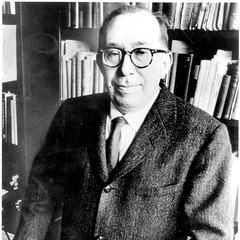
Leo Strauss
Leo Strauss was a prominent philosopher born on September 20, 1899, and died on October 18, 1973. His thoughts were deeply influenced by classical philosophy and German philosophy, especially by Martin Heidegger's philosophical ideas. Strauss's main contribution lies in his reinterpretation of political philosophy, emphasizing the close connection between political philosophy and moral philosophy. more
You May Also Like
Source: Persecution and the Art of Writing
Source: A Writer's Year: Fennel's Journal No. 3
“DSM er imidlertid et konsensusdokument, og dets diagnoser er uvidenskabelige og vilkårlige.”
Source: Deadly Psychiatry and Organised Denial
Source: Elastic: Flexible Thinking in a Time of Change
Source: Unapologetically You: Reflections on Life and the Human Experience