Quotessence
Home / Quotes / Quote by Eoin Colfer

Quote by Eoin Colfer

“By the time his vision had settled, the dwarf had disappeared into a maelstrom of churning muck. Butler decided not to attempt pursuit. Dying below ground was not very high on this *things to do* list. But there will be another day, fairy, he thought grimly. And there was to be. But that's another story.”

Quote by Eoin Colfer

Work

Artemis Fowl

In this fantasy-adventure novel, Artemis Fowl, a teenage genius and master criminal, discovers that a magical artifact has been stolen. He enlists the help of a fairy to track down the thief and recover the artifact, leading to a series of thrilling encounters and unexpected alliances. more

Author

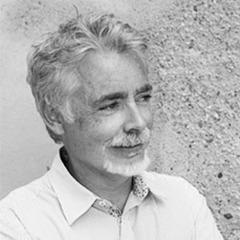
Eoin Colfer
Eoin Colfer

Eoin Colfer is an Irish author best known for his children's literature. He gained international recognition as one of the authors of the 'Harry Potter and the Deathly Hallows' continuation series. Born on May 14, 1965, Colfer's works are celebrated for their humor and imagination, appealing to young readers. more

You May Also Like

“A hospice nurse, on the advice of a Catholic chaplain decades ago, left the window slightly open to make it easier for one's spirit to travel. Ma had sung with her son twenty-one hours before she passed by him toward that window; indeed she sang until the day she died, just as she said she would, and I believe it was her harmony, not her spirit that first arrived at heaven's door.”

“I am leery of suggesting the idea that endings are controllable. No one ever really has control. Physics and biology and accident ultimately have their way in our lives. But the point is that we are not helpless either. Courage is the strength to recognize both realities. We have room to act, to shape our stories, though as time goes on it is within narrower and narrower confines. A few conclusions become clear when we understand this: that our most cruel failure in how we treat the sick and the aged is the failure to recognize that they have priorities beyond merely being safe and living longer; that the chance to shape one’s story is essential to sustaining meaning in life; that we have the opportunity to refashion our institutions, our culture, and our conversations in ways that transform the possibilities for the last chapters of everyone’s lives.”

“I think of Gould and his essay every time I have a patient with a terminal illness. There is almost always a long tail of possibility, however thin. What’s wrong with looking for it? Nothing, it seems to me, unless it means we have failed to prepare for the outcome that’s vastly more probable. The trouble is that we’ve built our medical system and culture around the long tail. We’ve created a multitrillion-dollar edifice for dispensing the medical equivalent of lottery tickets—and have only the rudiments of a system to prepare patients for the near certainty that those tickets will not win. Hope is not a plan, but hope is our plan.”