Quotessence
Home / Quotes / Quote by Roland Barthes

Quote by Roland Barthes

“A cold winter night. I'm warm enough, yet I'm alone. And I realize that I'll 'have' to get used to existing quite 'naturally' within the solitude, functioning there, working there, accompanied by, 'fastened to' the "presence of absence.”

Quote by Roland Barthes

Author
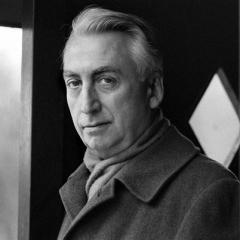
Roland Barthes
Roland Barthes

Roland Barthes (November 12, 1915 – March 25, 1980) was a French philosopher, literary critic, semiotician, and sociologist. He was a leading figure in structuralism and post-structuralism, known for his profound insights into semiotics, cultural criticism, and literary theory. His works, such as Mythologies, S/Z, and The Death of the Author, challenged traditional notions of authorship and meaning, emphasizing the multiplicity of texts and the active role of readers. Barthes' interdisciplinary approach influenced cultural studies, media analysis, and postmodern thought, making him one of the most influential intellectuals of the 20th century. more

You May Also Like

“The cross always simultaneously means rejection, and that the disgrace of suffering is part of the cross. Being expelled, despised, and abandoned by people in one's suffering is part of the cross. Being expelled, despised, and abandoned by people in one's suffering, as we find in the unending lament of the psalmist, is an essential feature of the suffering of the cross, yet one no longer comprehensible to a form of Christian life unable to distinguish between bourgeois and Christian existence.”

“Remembering​ ​is​ ​something​ ​God​ ​asks​ ​us​ ​to​ ​do​ ​over​ ​and​ ​over​ ​in​ ​the​ ​Bible:​ ​“Remember the​ ​Sabbath​ ​day​ ​by​ ​keeping​ ​it​ ​holy”​ ​(Exod.​ ​20:8).​ ​​ ​“Remember​ ​your​ ​Creator”​ ​(Eccles.​ ​12:1).​ ​​ ​The Israelites​ ​were​ ​experts​ ​at​ ​remembering,​ ​building​ ​altars​ ​of​ ​thanks​ ​and​ ​celebrating​ ​festivals​ ​to​ ​be mindful​ ​of​ ​God’s​ ​mighty​ ​acts​ ​of​ ​provision.​ ​​ ​They​ ​had​ ​much​ ​to​ ​celebrate:​ ​​ ​the​ ​parting​ ​of​ ​the​ ​Red Sea,​ ​the​ ​supply​ ​of​ ​manna​ ​in​ ​the​ ​desert,​ ​the​ ​cloud​ ​by​ ​day​ ​and​ ​the​ ​pillar​ ​of​ ​fire​ ​by​ ​night.​ ​​ ​In remembering,​ ​they​ ​knew​ ​God​ ​was​ ​faithful,​ ​and​ ​it​ ​fortified​ ​their​ ​faith​ ​for​ ​the​ ​next​ ​battle​ ​ahead. All​ ​of​ ​us​ ​who​ ​are​ ​Christians​ ​are​ ​asked​ ​to​ ​remember​ ​too.​ ​​ ​The​ ​violence​ ​of​ ​the​ ​cross​ ​is​ ​in front​ ​of​ ​us​ ​each​ ​time​ ​we​ ​take​ ​communion--”Do​ ​this​ ​in​ ​remembrance​ ​of​ ​Me”​ ​(Luke​ ​22:19). Though​ ​it​ ​isn’t​ ​easy​ ​to​ ​face,​ ​we​ ​are​ ​asked​ ​to​ ​remember​ ​the​ ​blood​ ​He​ ​spilled​ ​out​ ​for​ ​us.​ ​​ ​When​ ​I embrace​ ​His​ ​suffering​ ​for​ ​me,​ ​it​ ​gives​ ​meaning​ ​to​ ​my​ ​own.​ ​​ ​I​ ​know​ ​it​ ​also​ ​forces​ ​me​ ​to remember​ ​the​ ​pain​ ​of​ ​others.​ ​​ ​And​ ​God​ ​doesn’t​ ​want​ ​me​ ​to​ ​forget​ ​the​ ​innocent​ ​blood​ ​that​ ​was shed​ ​over​ ​the​ ​hills​ ​of​ ​Rwanda.​ ​​ ​The​ ​act​ ​of​ ​remembering​ ​holds​ ​something​ ​very​ ​sacred--it​ ​makes us​ ​more​ ​grateful.​ ​​ ​We​ ​have​ ​to​ ​be​ ​willing​ ​to​ ​remember​ ​our​ ​pain​ ​so​ ​we​ ​can​ ​comfort​ ​and​ ​offer​ ​a place​ ​of​ ​healing​ ​for​ ​others.​ ​(pp.​ ​152-153)”

“Holy Suffering "Choosing to suffer means that there must be something wrong with you, but choosing God's will - even if it means you will suffer - is something very different...and no saint should ever dare to interfere with the lesson of suffering being taught in another saint's life...the people used to strengthen us are never those who sympathize with us; in fact, we are hindered by those who give us sympathy, because sympathy only serves to weaken us...Jesus said self-pity was of the devil (Matthew 16:21-23: 'Get thee behind me, Satan!') Look at God's incredible waste of His saints, according to the world's judgement. God seems to plant His saints in the most useless places...Jesus never measured His life by how or where He was of greatest use. God places His saints where they will bring the most glory to Him and we are totally incapable of judging where that may be.”