Quotessence
Home / Quotes / Quote by Pope Francis

Quote by Pope Francis

Work

Hope: The Autobiography

Browse quotes and source details for this work. more

Author
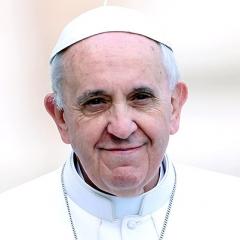
Pope Francis
Pope Francis

Pope Francis, born Jorge Mario Bergoglio on December 17, 1936 in Buenos Aires, Argentina, is the 266th Pope of the Catholic Church. Elected on March 13, 2013, he is the first pope from the Americas, the Southern Hemisphere, and the Jesuit order. Known for his humility, focus on the poor, and social justice, he advocates for church reform, environmental protection, and interfaith dialogue. His papacy addresses global issues like the COVID-19 pandemic and migration crises. more

You May Also Like

“Só então, já bem avançada a noite e depois de várias horas à conversa com eles, acabo por perceber que estou a jantar com um grupo de doidos varridos, capazes de falar entre gargalhadas do suplício das temperaturas inacreditáveis do inverno mongol, num ambiente de fraternidade sem restrições que, até esse momento, não sentira em parte nenhuma. (p. 244)”

“Once government undertakes to determine the whole wage structure and is thereby forced to control employment and production, there will be a far greater destruction of the present powers of the unions than their submission to the rule of equal law would involve. Under such a system the unions will have only the choice between becoming the willing instrument of governmental policy an being incorporated into the machinery of government, on the one hand, and being totally abolished, on the other. The former alternative is more likely to be chosen, since it would enable the existing union bureaucracy to retain their position and some of their personal power. But to the workers it would mean complete subjection to the control by a corporative state. The situation in most countries leaves us no choice but to await some such outcome or to retrace our steps. The present position of the unions cannot last, for they can function only in a market economy which they are doing their best to destroy.”

“Socialists have advocated numerous ways of democratizing the economy, from setting up worker cooperatives to nationalizing major industries... At the core of economic democracy is the notion that control should not be vested in a small group of people, but in the people who do the labor. Managers and owners shouldn't decide what the workers have to do, the workers should decide what managers have to do (or if they need managers at all). And they should own the workplaces themselves.”

“In the late 1970s, growth in Western economies began to slow down and returns on capital began to decline. Governments came under pressure to do something about it – to create a ‘fix’ for capital. So they attacked unions and gutted labour laws in order to drive the cost of wages down, and they privatised public assets that had previously been off limits to capital – mines, railways, energy, water, healthcare, telecommunications and so on – creating lucrative opportunities for private investors.”