“It would be futile to delude ourselves that at present, readers find every pathography unsavory. This attitude is excused with the reproach that from a pathographic elaboration of a great man one never obtains an understanding of his importance and his attainments, that it is therefore useless mischief to study in him things which could just as well be found in the first comer. However, this criticism is so clearly unjust that it can only be grasped when viewed as a pretext and a disguise for something. As a matter of fact pathography does not aim at making comprehensible the attainments of the great man; no one should really be blamed for not doing something which one never promised. The real motives for the opposition are quite different. One finds them when one bears in mind that biographers are fixed on their heroes in quite a peculiar manner. Frequently they take the hero as the object of study because, for reasons of their personal emotional life, they bear him a special affection from the very outset. They then devote themselves to a work of idealization which strives to enroll the great men among their infantile models, and to revive through him, as it were, the infantile conception of the father. For the sake of this wish they wipe out the individual features in his physiognomy, they rub out the traces of his life's struggle with inner and outer resistances, and do not tolerate in him anything of human weakness or imperfection; they then give us a cold, strange, ideal form instead of the man to whom we could feel distantly related. It is to be regretted that they do this, for they thereby sacrifice the truth to an illusion, and for the sake of their infantile phantasies they let slip the opportunity to penetrate into the most attractive secrets of human nature.”
Quote by Sigmund Freud
Work
Leonardo da Vinci and a Memory of His Childhood
Browse quotes and source details for this work. more
Author
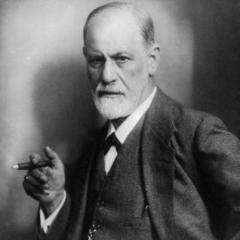
Sigmund Freud
Sigmund Freud, born on May 6, 1856, in Moravia, and died on September 23, 1939, in London, was an Austrian neurologist and the founder of psychoanalysis. Known as the father of modern psychology, Freud made significant contributions to the understanding of human psychology, introducing concepts such as the unconscious mind, dream analysis, and sexual theory. more
You May Also Like
“Yes, I've endured so much, and you seem to think this means I will endure anything. It does not.”
Source: The Message To The Planet
Source: The Message To The Planet
“I never knew what feeling was I only felt the pain”
Source: Rome: Poems
Source: The Hireling
Source: Thirst: 2600 Miles to Home
Source: Limits to Pain: The Role of Punishment in Penal Policy
“Endless suffering and circle”
Source: Rome: Poems
Source: Błoto słodsze niż miód. Głosy komunistycznej Albanii