Quotessence
Home / Quotes / Quote by Theodora Goss

Quote by Theodora Goss

“This is magnificent,” said Justine. “I’ve never seen anything like it. But I can’t make out the artist’s name?” “It’s by a friend of mine,” said Irene. “His name is not known outside of Vienna, but it will be—I think someday soon, all of Europe will be talking about Gustav Klimt. I was the model for this one. I don’t know if you can see the resemblance.”

Quote by Theodora Goss

Work

European Travel for the Monstrous Gentlewoman

Browse quotes and source details for this work. more

Author
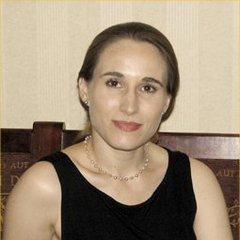
Theodora Goss
Theodora Goss

Theodora Goss is an American speculative fiction writer, known for her unique voice and thought-provoking narratives. Her work often explores themes of identity, gender, and the human condition. Goss has published numerous short stories and novels, and has received several awards for her writing, including the World Fantasy Award and the Nebula Award. more

You May Also Like

“BEATRICE: Laura told me it might help if I read aloud. Mina had given us a book of fairy tales. Blue Fairy Tales? Blue Book of Fairy Tales? I do not remember the exact title. I was never given fairy tales to read as a child, only scientific treatises. How I would have enjoyed them! Although I do not understand how a shoe could fit only one woman in an entire kingdom. DIANA: It was a magical shoe. BEATRICE: Still, that is not logical. I can accept pumpkins turning into coaches, and lizards into footmen, but a shoe will fit many women of the same size. How could the prince know he was choosing the right one?”

“At birth we are red-faced, round, intense, pure. The crimson fire of universal consciousness burns in us. Gradually, however, we are devoured by our parents, gulped by schools, chewed up by peers, swallowed by social institutions, wolfed by bad habits, and gnawed by age; and by that time we have been digested, cow style, in those six stomachs, we emerge a single disgusting shade of brown. The lesson of the beet, then, is this: hold on to your divine blush, your innate rosy magic, or end up brown. Once you’re brown, you’ll find that you’re blue. As blue as indigo. And you know what that means, Indigo. Indigoing. Indigone.”

“I have just taught Soli to make borscht! Yesterday I bought beets with big, glossy leaves still caked with wet soil. Naneh washed them in the tub until her arthritis flared, but she's promised to make dolmas with the leaves. After we closed Soli tucked the beets under coals and roasted them all night. When I woke up I smelled caramel and winter and smoke. It made me so hungry, I peeled a hot, slippery one for breakfast and licked the ashes and charred juices off with my burnt fingertips. Noor, bruised from betrayal, remembered borscht, remembered stirring sour cream into the broth and making pink paisley shapes with the tip of her spoon, always surprised by the first tangy taste, each time anticipating sweetness. Her mother had called it a soup for the brokenhearted. She marveled at her father's enthusiasm for borscht, when for thirty years each day had been a struggle. Another man would've untied his apron long ago and left the country for a softer life, but not Zod. He would not walk away from his courtyard with its turquoise fountain and rose-colored tables beneath the shade of giant mulberry trees, nor the gazebo, now overgrown with jasmine, where an orchestra once played and his wife sang into the summer nights.”

“I guess everyone likes praise for what they do, but that night I enjoyed cooking for the Olekseis more than I ever had before. Everything about the ingredients, the smells, the textures, everything delighted me. Maybe I should specialize in Russian food. I sliced the garlic and dropped it into the pan. It started to sizzle, and I turned the heat down and began slicing the onion. It was very fresh, very pungent. My eyes watered, and I got sniffly. Then I smelled a hint of burn on the garlic and hurried back to the stove and shook the pan. Just in time. The slices were brown but not too brown. I was getting good at this. I could detect the smell of burning just before it happened. That had to be some sort of superpower. As I put the rest of the dish together- dicing deep, ruby beets; slicing carrots and Yukon gold potatoes, sizzling spicy sausage in the pan; spicing and tasting, and mixing, and finally pureeing the whole thing into a savory maroon liquid- I continued to marvel at the perfect ripeness and freshness of every ingredient I'd picked out.”

“Here is a detailed report from the Walter Reed pathology lab. Their examination was most helpful in giving us a lead for identification." The President looked at him in surprise. "You identified them?" "It was the analysis of the borscht paste that opened the door." "Borscht what?" "You recall that the Dade County coroner fixed death by hypothermia, or freezing?" "Yes." "Well, borscht paste is a godawful food supplement given to Russian cosmonauts. The stomachs of the three corpses were loaded with the stuff." "You're telling me that Raymond LeBaron and his crew were exchanged for three dead Soviet cosmonauts?" Emmett nodded. "We were even able to put a name on them through a defector, a former flight surgeon with the Russian space program. He'd examined each of them on several occasions." "When did he defect?" "He came over to our side in August of '87." "A little over two years ago." "That's correct," Emmett acknowledged. "The names of the cosmonauts found in LeBaron's blimp are Sergei Zochenko, Aleksandr Yudenich, and Ivan Ronsky. Yudenich was a rookie, but Zochenko and Ronsky were both veterans with two space flights apiece.”