Quotessence
Home / Quotes / Quote by Michael Cunningham

Quote by Michael Cunningham

Work

The Hours

The Hours is a complex narrative that weaves together the lives of three women: a modern-day housewife, a 1940s Los Angeles housewife, and a 1920s English writer. The story delves into the psychological and emotional journeys of these characters, highlighting their connections to the literary masterpiece 'Mrs. Dalloway' by Virginia Woolf. The novel is renowned for its exploration of themes such as the passage of time, the nature of memory, and the role of art in one's life. more
Author

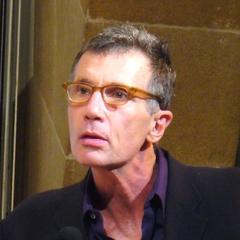
Michael Cunningham
Michael Cunningham

Michael Cunningham is an American writer renowned for his novel 'The Hours', which won the Pulitzer Prize in 1998. His works often explore themes of identity, memory, and gender. more

You May Also Like

“To speak of creation, There is always a guilt that throbs every artist’s heart on taking the credit of a piece of art that the creative force in the universe has thrusted inside of a human heart and stretched one’s hand towards building sand castles and lines on the ocean. It’s surreal, neither to be seen or to be saved. But if it is both “seen and saved” it could mean the force was strong enough to indulge in the play of the world, to rip apart the womb of the heart of a man and come out, to stretch its wings and break the cage, to scream till your voice reaches the moon. In all such cases it’s always a mystical force that creates art and never the artist.”

“SELFHOOD AND DISSOCIATION The patient with DID or dissociative disorder not otherwise specified (DDNOS) has used their capacity to psychologically remove themselves from repetitive and inescapable traumas in order to survive that which could easily lead to suicide or psychosis, and in order to eke some growth in what is an unsafe, frequently contradictory and emotionally barren environment. For a child dependent on a caregiver who also abuses her, the only way to maintain the attachment is to block information about the abuse from the mental mechanisms that control attachment and attachment behaviour.10 Thus, childhood abuse is more likely to be forgotten or otherwise made inaccessible if the abuse is perpetuated by a parent or other trusted caregiver. In the dissociative individual, ‘there is no uniting self which can remember to forget’. Rather than use repression to avoid traumatizing memories, he/she resorts to alterations in the self ‘as a central and coherent organization of experience. . . DID involves not just an alteration in content but, crucially, a change in the very structure of consciousness and the self’ (p. 187).29 There may be multiple representations of the self and of others. Middleton, Warwick. "Owning the past, claiming the present: perspectives on the treatment of dissociative patients." Australasian Psychiatry 13.1 (2005): 40-49.”