Quotessence
Home / Quotes / Quote by Paul Brunton

Quote by Paul Brunton

Work

Advanced contemplation: The peace within you

This book explores various contemplative techniques aimed at fostering peace and tranquility within the reader's mind and spirit. more

Author
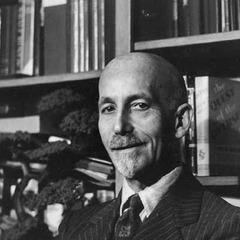
Paul Brunton
Paul Brunton

Paul Brunton was a British journalist and writer known for his interest in Eastern philosophy and mysticism. His works, such as 'A Search in Secret India' and 'The Quest of the Overself', had a profound impact on the Western world in the mid-20th century. more

You May Also Like

“The fall of dusk upon the Egyptian scene is an unforgettable event, an event of unearthly beauty. Everything is transformed in colour and the most vivid contrasts come into being between sky and earth. I sat alone on the yielding yellow sand before the stately, regal figure of the crouching Sphinx, a little to one side, watching with fascinated eyes the wonderful play of ethereal colours which swiftly appear and as swiftly pass when the dying sun no longer covers Egypt with golden glory. For who can receive the sacred message which is given him by the beautiful, mysterious afterglow of an African sunset, without being taken into a temporary paradise? So long as men are not entirely coarse and spiritually dead, so long will they continue to love the Father of Life, the sun, which makes these things possible by its unique sorceries. They were not fools, those ancients, who revered Ra, the great light, and took it into their hearts as god.”

“It is true that philosophy is quite aware of the Buddhistic picture of life, of the sorrows and sicknesses which drag him down at times. That is why it makes equanimity a leading item of the inner work upon himself, why it becomes so necessary. But it is also true that moments, moods, and glimpses are also possible when there is uplift, and he can confirm for himself that the human link with the higher power is a very real thing.”

“It is while working with the Short Path that the man discovers he may apply its principles to his worldly existence, his earthly fortunes too. He learns that the ultimate source of his physical welfare is not the ego but the Overself. If he looks only to the little ego for his supply, he must accept all its narrow limitations, its dependence on personal effort alone. But if he looks farther and recognizes his true source of welfare is with the Overself, with its miracle-working Grace, he knows that all things are possible to it. Hope, optimism, and high expectation make his life richer, more abundant.”

“The practice of extending love towards all living creatures brings on ecstatic states of cosmic joy. In this intently concentrated state he (the meditator) has the power to send beneficent thoughts over land or sea to a distant person and let them penetrate his mind.”

“One of the most valuable forms of yoga is the yoga of constant remembrance. Its subject may be a mystical experience, intuition, or idea. In essence it is really an endeavour to insert the transcendental atmosphere into the mundane life. The method of this exercise is to maintain uninterruptedly and unbrokenly the remembrance of the soul's nearness, the soul's reality, the soul's transcendence. The goal of this exercise is to become wholly possessed by the soul itself. This constant remembrance of the higher self becomes in time like a kind of holy communion […] "Be with IT" is the best advice for those who can understand it.”

“Experience shows that if a sufficiently deep level--not necessarily the deepest level but one that corresponds to what the yogis call savikalpa samadhi, which is not as deep as nirvikalpa--if that can be attained and then prolonged sufficiently in time, an artist or a writer can draw from the experience creative power for his work.”

“Everything is taken away from him; he is nothing and has nothing; yet he still feels one thing which utterly compensates for this loss. He feels the presence of the Overself [...] In the practice of Indian Yoga, Nirvikalpa Samadhi is considered to be the farthest point to which the practitioner can travel. Nirvikalpa Samadhi is the condition of the emptied mind, without any trace of thought, whether of the world or of the person himself; yet fully aware [...] So many conversations on the words of Jesus have taken his sentence "I and my Father are one" to mean a kind of union like marriage. But they overlook the fact that married couples still remain couples, still express the number two. Jesus did not say, "I and my father are two." The number one is definitely not two. For Jesus found, as every other man who attains that stage of consciousness finds, that when contemplating the Infinite Life-Power (which he named the Father) he himself vanished. There was then no other consciousness except that of the Infinite itself. For That was the substratum of his own "I." But what happened in his contemplation two thousand years ago still happens today; the same discovery is made when the illusion of egoity vanishes.”