Quotessence
Home / Quotes / Quote by Wallace Stevens

Quote by Wallace Stevens

“Poetry is a satisfying of the desire for resemblance. As the mere satisfying of a desire, it is pleasurable. But poetry if it did nothing but satisfy a desire would not rise above the level of many lesser things. Its singularity is that in the act of satisfying the desire for resemblance it touches the sense of reality, it enhances the sense of reality, heightens it, intensifies it.”

Quote by Wallace Stevens

Work

The Necessary Angel: Essays on Reality and the Imagination

This book is a compilation of essays that delve into the intricate connections between the tangible world and the realm of the imagination. The author examines how our perceptions of reality are shaped by our creative thoughts and dreams. more

Author
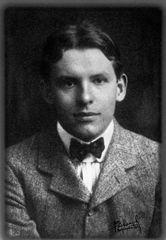
Wallace Stevens
Wallace Stevens

Wallace Stevens was an American poet known for his unique modernist style and philosophical reflections. His poetry often explores the connection between abstract concepts and everyday life, and is considered one of the most influential poets of the 20th century. more

You May Also Like

“William waved his hand, telling her, “Your turn. Let’s hear a sexual fantasy.” She thought for a moment. Eyes going dreamy, setting off all kinds of warning bells inside his head, she said, “I picture a strong, gorgeous man. He’s dressed, but not for long. He strips. I watch.” William’s mouth went dry. The warning bells? Forgotten. “And then?” She purred with pure, sexual carnality, nearly unmanning him. “He strips me, too, and...does a load of laundry, washing our dirty clothes. Oh, yeah. Oh, baby.”

“Originality is merely a minor, secondary bonus to the pleasure of thought. Individuality, too, is a secondary aspect of the will and desire. The will is never mine; desire is never mine. For them to be will and desire, they have to circulate and be exchanged as symbolic material. For want of this symbolic devolution, we operate a technical transfer of all these functions on to machines — a transference of the human on to the inhuman. Now, if some human being thinks for me, nothing is lost. He is not lost, neither am I. Whereas if a machine thinks in my stead, we are both lost. In fact, this stage of the transference on to the machine is past. Today, it is machines which transfer their functions on to man. Man's fetishization of the machine has been succeeded by the fetishization of man by the machine. Today, it is man who has become the object of the perverse desire of the machine, of its desire to function at all costs. The machine is no longer an excrescence or a protruberance of man – it is man who is now merely the sex organ of the machine (Burroughs). And this is still quite a large claim, for what sex is the machine? Man has, rather, become the inflatable prosthesis of a sexless machine – the phantom limb of a useless function. The infinite degree, the degree zero, degree Xerox of the libido. Among those devices whose virtual libido man stokes up, there is of course the computer, of which man is the unconscious masturbator and his brain a hyper-object of concupiscence, but there is also the spectacularized body of woman, become a bachelor machine, a promotional and pornographic hypostasis, of which man is merely the sexless operator, the slavish voyeur, the auto-decoder.”