Quotessence
Home / Quotes / Quote by Graham Hancock

Quote by Graham Hancock

“After weaning the indigenous people's of Egypt: 'from their miserable and barbarous manners, [Osiris] taught them how to till the earth, and how to sow and reap crops, he formulated a code of laws for them, and made them worship the gods and perform service to them. He then left Egypt and traveled over the rest of the world teaching the various nations to do what his own subjects were doing. He forced no man to carry out his instructions, but by means of gentle persuasion and an appeal to their reason, he succeeded in inducing them to practice what he preached.”

Quote by Graham Hancock

Work

Author

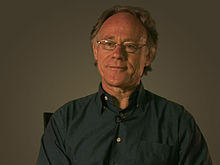
Graham Hancock
Graham Hancock

Graham Hancock is a British writer known for his research into ancient civilizations and mysterious phenomena. His works delve into the mysteries of human history and culture, including ancient Egypt, the Maya, and Atlantis. more

You May Also Like

“Les arbres savent quand un des leurs a soif et ils savent aussi comment rediriger l’eau vers lui. Ils sont solidaires. Ils peuvent se prévenir l’un l’autre du danger, des prédateurs, assurer la survie du groupe dans son ensemble. Tout part des racines, des origines, mais le message transite par les racines secondaires et les radicelles, qui sont plus fines, s’étendent plus loin. Tout se fait en chuchotant à travers le réseau souterrain de champignons, le mycélium, ce que tout le monde croit pourri, oui.”

“It's not unreasonable [...] to suppose that some kind of cosmic "sky-ground" religion lay behind the alignments to the solstices and the equinoxes at Watson Brake and at the other early sites--a religion sufficiently robust to ensure the continuous successful transmission of a system of geometry, astronomy, and architecture over thousands of years. John Clark is in no doubt. 'The evidence,' he says, 'suggests very old and widely disseminated knowledge about how to build large sites. The building lore persisted remarkably intact for so long that I think we can, and must, assume that it was part of special knowledge tied to ritual practice.' Where did this special knowledge come from before it appeared at Watson Brake?”

“For Zen Buddhism, historical narratives do matter; stories of the "transmission of the lamp" of the awakened mind down through the ages constitute the narrative thread that holds the history of Zen together, supporting the continuity and authority of its institutional tradition. But what matters most to many sincere Zen practitioners, especially today, is how the teachings and practices embedded in those stories can illuminate and change our lives-not when, where, and by whom they were first taught and written down.”

“The job of a Zen master is to transmit the dharma. The word dharma is a cognate of the Pali word for carrying. The dharma that is passed from teacher to student involves the essential teachings of the Buddha and the spirit of living those truths. Transmission is applied both to the ritual identification and acknowledgment of a particular student as the legitimate successor, or dharma heir, of a Zen master, and to the ordinary, daily interactions between the teacher and all students. Transmit is an oddly technical verb, and the analogies it occasions are oddly useful. If you imagine the dharma as an electrical current arcing across a distance from one conductive wire to another, you get the basic idea. However, if you have even a rudimentary grasp of physics, you know that the power of an electrical charge decreases as it travels this way This is precisely what is not supposed to happen to the dharma as it passes from master to disciple. A dharma heir is meant to be someone whose enlightenment or understanding equals or, preferably, surpasses that of the master.”

“Fils, s'il t'est donné de vivre, tu rencontreras sur ta route des hommes qui sont suivis par des troupeaux de montagnes. Des hommes qui arrivent dans des pays, nus et crus. On remarque à peine que leurs mains ouvertes éclairent l'ombre comme des veilleuses. Quand on le remarque. Et voilà que les montagnes se lèvent et marchent à leur suite. Et voilà que tous les mécaniciens de raison tapent du poing sur leurs tables. Voilà qu'ils crient : « Il y a dix ans que je cherche des formules, dix ans que je noircis du papier, dix ans que j'use des arithmétiques. Dix ans que je cherche le bouton secret ». Et celui-là est arrivé et il a dit tout simplement : « Montagne » et puis la montagne s'est dressée. Où est la justice ? « Elle est là, fiston la justice. L'espérance… »”