Quotessence
Home / Quotes / Quote by Vernon L. Smith

Quote by Vernon L. Smith

“Samuel Gregg: Smith’s experiments have also provided considerable evidence that, as he wrote in a 1994 paper, “economic agents can achieve efficient outcomes which are not part of their intention.” Many will recognize this as one of the central claims of The Wealth of Nations, the book written by Smith’s famous namesake two and a half centuries ago. Interestingly, Adam Smith’s argument was not one that Vernon Smith had been inclined to accept before beginning his experimental research. As the latter went on to say in his 1994 paper, fey outside of the Austrian and Chicago traditions believed it, circa 1956. Certainly, I was not primed to believe it, having been raised by a socialist mother, and further handicapped (in this regard) by a Harvard education.” Given, however, what his experiments revealed about what he called “the error in my thinking,” Smith changed his mind. Truth was what mattered—not ego or preexisting ideological commitments.”

Quote by Vernon L. Smith

Work

Author

Vernon L. Smith
Vernon L. Smith

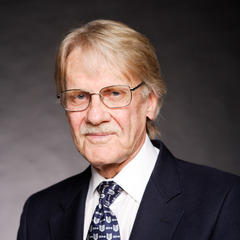
Vernon L. Smith is an esteemed economist renowned for his pioneering work in experimental economics. Born on January 1, 1927, he has received numerous honors throughout his career, including the Nobel Prize in Economics in 1991. more

You May Also Like

“In his 2001 book, Economics as Religion, economist Robert Nelson recounted the ways in which economics came to operate in society with its own religion-like structure. Nelson argues that modern economics has operated in many ways as a secularized version of Protestant theology in which the primary evil is economics scarcity and in which deliverance from this evil (and the attainment of heaven on earth) will come through application of economic science to promote efficiency (and fairness) in production and distribution. In this worldview, economists, as technical advisors to governmental managers, serve as a new “scientific” priesthood effecting a secular salvation of human society through the application of constructivist reason, the sort of reasoning that seeks to deliberately design choices and institutions to generate what are perceived as “optimal” outcomes. Here, then, within the very discipline to which Vernon Smith has devoted his life’s work, there seems to be a persistent tendency if not to outright materialism then to a reduction of human rationality within constructivist constraints. As Smith acknowledges, “predominantly, both economists and psychologists are reluctant to allow that naive and unsophisticated agents can achieve socially optimal ends without a comprehensive understanding of the whole, as well as their individual parts, implemented by deliberate action. There is no magic.”

“Gregg: I notice you did not use the word greed in that answer. When many people hear “self-interest,” they think “greed”. So are you suggesting that a Smithian approach actually has nothing to do with greed at all when it comes to self-interest properly understood? Smith: It’s not a matter of greed. It’s a matter of, as Smith says, the individual being fitter than anyone else to take care of himself or herself in terms of knowing what he or she wants and in making judgments about that. And so, knowing that other people are also self-interested, I know what action I take would be hurtful to them. And then I take that into account. In other words, being self-interested is an input to our socializing process. There are many experimental economists and behavioral economists who want to explain that with a utility function so that if I am other-regarding, it’s because I am taking into account your reward as well as mine. Adam Smith says no. Adam Smith is right. It is not in the utility function. That’s the difference between an emphasis on outcomes and process.”

“The best guide I know of is political economist Thomas Ferguson’s “investment theory of politics,” mentioned above, the thesis that to a good first approximation, we can understand elections to be occasions in which groups of investors coalesce to control the state, a very good predictor of policy over a long period, as he shows. For 2008, we would therefore anticipate that the interests of the financial industries, the major funders (who preferred Obama to McCain), would be “most peculiarly attended to” by government policy, in accord with Adam Smith’s maxim. And so we find.”