Quotessence
Home / Quotes / Quote by Thomas Love Peacock

Quote by Thomas Love Peacock

“When Scythrop grew up, he was sent, as usual, to a public school, where a little learning was painfully beaten into him, and from thence to the university, where it was carefully taken out of him; and he was sent home like a well-threshed ear of corn, with nothing in his head.”

Quote by Thomas Love Peacock

Work

Nightmare Abbey

This novel delves into the mysterious and unsettling atmosphere of an English country house, where romance and obsession intertwine, creating a chilling narrative that explores the complexities of human relationships. more

Author

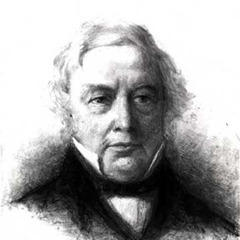
Thomas Love Peacock
Thomas Love Peacock

Thomas Love Peacock, born on October 18, 1785, and died on January 23, 1866, was a prominent 19th-century British novelist and satirical writer. Known for his unique sense of humor and profound insights into social phenomena, his works have left a lasting impact on readers. more

You May Also Like

“[On hearing that 86% of gay teens have experienced harassment] Eighty-six percent? Eighty-six per-fuckin-cent WERE harassed?! That means fourteen per-fuckin-cent WEREN'T harassed? WHAT?! At MY school a hundred percent of the children - gay, straight, transgendered, bi, sell... or trade - WERE harassed. She's saying that fourteen percent of the gay students were NOT harassed? That seems impossible. At MY school any one of us would have sucked Elton John's COCK at a mandatory school assembly for a fourteen percent chance of NOT being harassed.”

“Le cancre Il dit non avec la tête Mais il dit oui avec le coeur Il dit oui à ce qu'il aime Il dit non au professeur Il est debout On le questionne Et tous les problèmes sont posés Soudain le fou rire le prend Et il efface tout Les chiffres et les mots Les dates et les noms Les phrases et les pièges Et malgré les menaces du maître Sous les huées des enfants prodiges Avec des craies de toutes les couleurs Sur le tableau noir du malheur Il dessine le visage du bonheur”

“He smiled all the way to physics class. He almost laughed out loud when he passed through the door and saw her shadowy, hunched-over form casting around for a seat in the back. She was in his class; this was excellent. Maybe she’d call him a name if he struck up another conversation. Even curse him out. That might fun. God, he’d probably earn himself a restraining order if he tried to sit next to her. He was so tired of saccharine smiles and cloying tones of voice. People always plastered their eyes to his face for fear of looking anywhere else. He was fed up with everybody being so goddamned nice. That’s why he’d already fallen in love with this weird, maladjusted, beautiful girl who carried a chip the size of Ohio on her shoulder. Because nobody was ever mean to the guy in the wheelchair.”

“I fancy my father thought me an odd child, and had little fondness for me; though he was very careful in fulfilling what he regarded as a parent's duties. But he was already past the middle of life, and I was not his only son. My mother had been his second wife, and he was five-and-forty when he married her. He was a firm, unbending, intensely orderly man, in root and stem a banker, but with a flourishing graft of the active landholder, aspiring to county influence: one of those people who are always like themselves from day to day, who are uninfluenced by the weather, and neither know melancholy nor high spirits. I held him in great awe, and appeared more timid and sensitive in his presence than at other times; a circumstance which, perhaps, helped to confirm him in the intention to educate me on a different plan from the prescriptive one with which he had complied in the case of my elder brother, already a tall youth at Eton. My brother was to be his representative and successor; he must go to Eton and Oxford, for the sake of making connexions, of course: my father was not a man to underrate the bearing of Latin satirists or Greek dramatists on the attainment of an aristocratic position. But intrinsically, he had slight esteem for "those dead but sceptred spirits"; having qualified himself for forming an independent opinion by reading Potter's Aeschylus, and dipping into Francis's Horace. To this negative view he added a positive one, derived from a recent connexion with mining speculations; namely, that scientific education was the really useful training for a younger son. Moreover, it was clear that a shy, sensitive boy like me was not fit to encounter the rough experience of a public school. Mr. Letherall had said so very decidedly. Mr. Letherall was a large man in spectacles, who one day took my small head between his large hands, and pressed it here and there in an exploratory, suspicious manner - then placed each of his great thumbs on my temples, and pushed me a little way from him, and stared at me with glittering spectacles. The contemplation appeared to displease him, for he frowned sternly, and said to my father, drawing his thumbs across my eyebrows - 'The deficiency is there, sir-there; and here,' he added, touching the upper sides of my head, 'here is the excess. That must be brought out, sir, and this must be laid to sleep.' I was in a state of tremor, partly at the vague idea that I was the object of reprobation, partly in the agitation of my first hatred - hatred of this big, spectacled man, who pulled my head about as if he wanted to buy and cheapen it. ("The Lifted Veil")”