Quotessence
Home / Quotes / Quote by Gabrielle Zevin

Quote by Gabrielle Zevin

“Sadie didn't know why she bothered. You would think women would want to stick together when there weren't that many of them, but they never did. It was as if being a woman was a disease that you didn't want to catch. As long as you didn't associate with the other women you could imply to the majority, the men: I'm not like those other ones. - Sadie Green”

Quote by Gabrielle Zevin

Work

Tomorrow, and Tomorrow, and Tomorrow

Browse quotes and source details for this work. more

Author
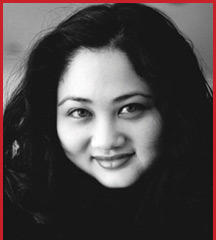
Gabrielle Zevin
Gabrielle Zevin

Gabrielle Zevin, born on October 24, 1977, is an American author whose works span across various genres, including novels, young adult literature, and adult fiction. She is admired for her unique narrative style and profound humanistic concerns. more

You May Also Like

“The rights paradigm, which, as I interpret it, morally requires the abolition of animal exploitation and requires veganism as a matter of fundamental justice, is radically different from the welfarist paradigm, which, in theory focuses on reducing suffering, and, in reality, focuses on tidying up animal exploitation at its economically inefficient edges. In science, those who subscribe to one paradigm are often unable to understand and engage those who subscribe to another paradigm precisely because the theoretical language that they use is not compatible. I think that the situation is similar in the context of the debate between animal rights and animal welfare. And that is why welfarists simply cannot understand or accept the slavery analogy.”

“I began to realize it in Spain--that I wasn't free, that I couldn't be free until I was attached--no, committed--to someone." "To someone? Not something?" She was silent. "I don't know," she said at last, "but I'm beginning to think that women get attached to something really by default. They'd give it up, if they could, anytime, for a man. Of course they can't admit this, and neither can most of them let go of what they have. But I think it kills them--perhaps I only mean," she added, after a moment, "that it would have killed me.”

“Could Stephen have met men on equal terms, she would always have chosen them as her companions; she preferred them because of their blunt, open outlook, and with men she had much in common—sport for instance. But men found her too clever if she ventured to expand, and too dull if she suddenly subsided into shyness. In addition to this there was something about her that antagonized slightly, an unconscious presumption. Shy though she might be, they sensed this presumption; it annoyed them, it made them feel on the defensive. She was handsome but much too large and unyielding both in body and mind, and they liked clinging women. They were oak-trees, preferring the feminine ivy. It might cling rather close, it might finally strangle, it frequently did, and yet they preferred it, and this being so, they resented Stephen, suspecting something of the acorn about her.”

“Captain Ramsay was kind-hearted, he would try very hard to be complimentary; his grey eyes would try to express admiration, polite admiration as they rested on Stephen. His voice would sound softer and more confidential, the voice that nice men reserve for good women, protective, respectful, yet a little sex-conscious, a little expectant of a tentative response. But Stephen would feel herself growing more rigid with every kind word and gallant allusion. Openly hostile she would be feeling, as poor Captain Ramsay or some other victim was manfully trying to do his duty.”