Quotessence
Home / Quotes / Quote by George Orwell

Quote by George Orwell

“It was a queer, rather disgusting scene. Below were the handful of simple, well-meaning people, trying hard to worship; and above were the hundred men whom they had fed, deliberately making worship impossible. A ring of dirty, hairy faces grinned down from the gallery, openly jeering. What could a few women and old men do against a hundred hostile tramps? They were afraid of us, and we were frankly bullying them. It was our revenge upon them for having humiliated us by feeding us. ... A man receiving charity practically always hates his benefactor—it is a fixed characteristic of human nature; and, when he has fifty or a hundred others to back him, he will show it.”

Quote by George Orwell

Work

Down and Out in Paris and London

This book is a candid account of the author's time living in poverty, focusing on his struggles in Paris and London. It offers insights into the challenges faced by the underprivileged and provides a glimpse into the social and economic conditions of the time. more

Author
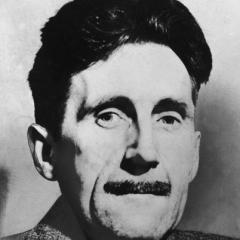
George Orwell
George Orwell

George Orwell, born Eric Arthur Blair, was a British novelist and political critic. Known for his sharp social criticism and profound insights into totalitarianism, Orwell is best remembered for his novels '1984' and 'Animal Farm', which remain influential to this day. more

You May Also Like

“We could be Immortal If we just let go of hate If we just let go of chaos If we just let go of war If we just let go of guns We could be Immortal If we just embraced love Put human beings & nature first But instead we choose To be the worst examples Of our primitive selves Lacking in all of our best virtues Lacking in any new ideas or values Without these realizations We go one step forward & Always two steps back Never succeeding Never growing Dead”

“Do you ever feel how unfair life can get for someone? Do you ever feel how someone feels when they are born into a poor family? When someone finds out that they have to work in a job like being a waiter/ waitress in a hotel at the age of 20 years or a office boy or office girl in an organisation? They did not have the education that you were privileged to have because you were born to parents who were smarter than the common man or woman of that time. What kind of a world are we giving to everyone? Why is this world so unfair to most people?”

“We are not the only intelligence in the conversation. We are simply the ones who keep forgetting to listen. The world has been speaking since before we arrived, and it will continue long after. The only question is how many of its sentences we will be present enough to receive.”

“The aid program that I am suggesting must not be used by the wealthy nations as a surreptitious means to control the poor nations. Such an approach would lead to a new form of paternalism and a neocolonialism which no self-respecting nation could accept. Ultimately, foreign aid programs must be motivated by a compassionate and committed effort to wipe poverty, ignorance and disease from the face of the earth. Money devoid of genuine empathy is like salt devoid of savor, good for nothing except to be trodden under foot of men. The West must enter into the program with humility and penitence and a sober realization that everything will not always “go our way.” It cannot be forgotten that the Western powers were but yesterday the colonial masters. The house of the West is far from in order, and its hands are far from clean.”

“My family won't last a month without me.' Lucien chuckled, and I gritted my teeth. 'Do you know what it's like to be hungry?' I demanded, anger rising to devour any common sense. 'Do you know what it's like to not know when your next meal will be?' Tamlin's jaw tightened. 'Your family is alive and well-cared for. You think so low of faeries that you believe I'd take their only source of income and nourishment and not replace it?”

“Our cities have constructed elaborate expressways and elevated skyways, and white Americans speed from suburb to inner city through vast pockets of black deprivation without ever getting a glimpse of the suffering and misery in their midst. But while so many white Americans are unaware of conditions inside the ghetto, there are very few ghetto dwellers who are unaware of the life outside. Their television sets bombard them day by day with the opulence of the larger society. From behind the ghetto walls they see glistening towers of glass and steel springing up almost overnight. They hear jet liners speeding over their heads at six hundred miles an hour. They hear of satellites streaking through outer space and revealing details of the moon. Then they begin to think of their own conditions. They know that they are always given the hardest, ugliest, most menial work to do. They look at these impressive buildings under construction and realize that almost certainly they cannot get those well-paying construction jobs, because building trade unions reserve them for whites only. They know that people who built the bridges, the mansions and docks of the South could build modern buildings if they were only given a chance for apprenticeship training. They realize that it is hard, raw discrimination that shuts them out. It is not only poverty that torments the Negro; it is the fact of poverty amid plenty. It is a misery generated by the gulf between the affluence he sees in the mass media and the deprivation he experiences in his everyday life.”