Quotessence
Home / Quotes / Quote by Leopold von Sacher-Masoch

Quote by Leopold von Sacher-Masoch

“We are faithful as long as we love, but you demand faithfulness of a woman without love, and the giving of herself without enjoyment. Who is cruel there--woman or man? You of the North in general take love too soberly and seriously. You talk of duties where there should be only a question of pleasure.”

Quote by Leopold von Sacher-Masoch

Work

Venus in Furs

A classic work of literature that delves into the complex psychological interplay between a dominant male and a female dominatrix, examining the boundaries of consent and the nature of desire. more

Author

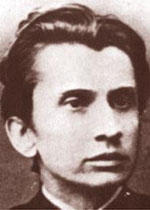
Leopold von Sacher-Masoch

Leopold von Sacher-Masoch was an Austrian writer renowned for his exploration of masochism and sadomasochism in literature. His novel 'Venus in Furs' is a cornerstone of sadomasochistic fiction. Born on January 27, 1836, Sacher-Masoch's life was characterized by his complex personality and intense personal relationships, which frequently influenced his writing. more

You May Also Like

“Granting that you have more money than others, and that you don’t deserve such wealth—but stopping there—allows you to settle the score by paying your taxes and advocating more redistribution. This reductive attitude toward inequality has the added comfort of justifying nasty judgments about the other side.”

“What keeps you from giving now? Isn't the poor person there? Aren't your own warehouses full? Isn't the reward promised? The command is clear: the hungry person is dying now, the naked person is freezing now, the person in debt is beaten now-and you want to wait until tomorrow? "I'm not doing any harm," you say. "I just want to keep what I own, that's all." You own! You are like someone who sits down in a theater and keeps everyone else away, saying that what is there for everyone's use is your own...If everyone took only what they needed and gave the rest to those in need, there would be no such thing as rich and poor. After all, didn't you come into life naked, and won't you return naked to the earth? The bread in your cupboard belongs to the hungry person; the coat hanging unused in your closet belongs to the person who needs it; the shoes rotting in your closet belong to the person with no shoes; the money which you put in the bank belongs to the poor. You do wrong to everyone you could help, but fail to help. —Basil, fourth century.”