Quotessence
Home / Quotes / Quote by Aleister Crowley

Quote by Aleister Crowley

Work

Diary of a Drug Fiend

Browse quotes and source details for this work. more

Author
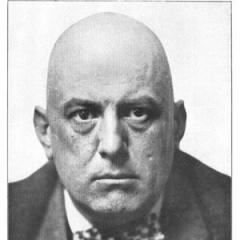
Aleister Crowley
Aleister Crowley

Aleister Crowley, a British poet, mystic, and writer, was born on October 12, 1875, and died on December 1, 1947. He is known for his poetic works and mystical practices, and is considered one of the most controversial figures of the 20th century. more

You May Also Like

“Thus Epicurus also, when he designs to destroy the natural fellowship of mankind, at the same time makes use of that which he destroys. For what does he say? ‘Be not deceived, men, nor be led astray, nor be mistaken: there is no natural fellowship among rational animals; believe me. But those who say otherwise, deceive you and seduce you by false reasons.’—What is this to you? Permit us to be deceived. Will you fare worse, if all the rest of us are persuaded that there is a natural fellowship among us, and that it ought by all means to be preserved? Nay, it will be much better and safer for you. Man, why do you trouble yourself about us? Why do you keep awake for us? Why do you light your lamp? Why do you rise early? Why do you write so many books, that no one of us may be deceived about the gods and believe that they take care of men; or that no one may suppose the nature of good to be other than pleasure? For if this is so, lie down and sleep, and lead the life of a worm, of which you judged yourself worthy: eat and drink, and enjoy women, and ease yourself, and snore. And what is it to you, how the rest shall think about these things, whether right or wrong? For what have we to do with you? You take care of sheep because they supply us with wool and milk, and last of all with their flesh. Would it not be a desirable thing if men could be lulled and enchanted by the Stoics, and sleep and present themselves to you and to those like you to be shorn and milked? For this you ought to say to your brother Epicureans: but ought you not to conceal it from others, and particularly before every thing to persuade them, that we are by nature adapted for fellowship, that temperance is a good thing; in order that all things may be secured for you? Or ought we to maintain this fellowship with some and not with others? With whom then ought we to maintain it? With such as on their part also maintain it, or with such as violate this fellowship? And who violate it more than you who establish such doctrines? What then was it that waked Epicurus from his sleepiness, and compelled him to write what he did write?”

“Because a child is bound to grow, society is intent upon cultivating the child’s mind to mature into a very specific type of responsible person. Children take great pleasure in small things that have no practical purpose in their dreamy world where they can be as wild as wind. Each year a part of the child dies, as it is burden with adult responsibilities.”

“I had no illusions about you,' he said. 'I knew you were silly and frivolous and empty-headed. But I loved you. I knew that your aims and ideals were vulgar and commonplace. But I loved you. I knew that you were second-rate. But I loved you. It's comic when I think how hard I tried to be amused by the things that amused you and how anxious I was to hide from you that I wasn't ignorant and vulgar and scandal-mongering and stupid. I knew how frightened you were of intelligence and I did everything I could to make you think me as big a fool as the rest of the men you knew. I knew that you'd only married me for convenience. I loved you so much, I didn't care. Most people, as far as I can see, when they're in love with someone and the love isn't returned feel that they have a grievance. They grow angry and bitter. I wasn't like that. I never expected you to love me, I didn't see any reason that you should. I never thought myself very lovable. I was thankful to be allowed to love you and I was enraptured when now and then I thought you were pleased with me or when I noticed in your eyes a gleam of good-humored affection. I tried not to bore you with my love; I knew I couldn't afford to do that and I was always on the lookout for the first sign that you were impatient with my affection. What most husbands expect as a right I was prepared to receive as a favor.”