“... we find a complete contradiction in our wishing to live without suffering, a contradiction that is therefore implied by the frequently used phrase “blessed life.” This will certainly be clear to the person who has fully grasped my discussion that follows. This contradiction is revealed in this ethic of pure reason itself by the fact that the Stoic is compelled to insert a recommendation of suicide in his guide to the blissful life (for this is what his ethics always remains). This is like the costly phial of poison to be found among the magnificent ornaments and apparel of oriental despots, and is for the case where the sufferings of the body, incapable of being philosophized away by any principles and syllogisms, are paramount and incurable. Thus its sole purpose, namely blessedness, is frustrated, and nothing remains as a means of escape from pain except death. But then death must be taken with unconcern, just as is any other medicine. Here a marked contrast is evident between the Stoic ethics and all those other ethical systems mentioned above. These ethical systems make virtue directly and in itself the aim and object, even with the most grievous sufferings, and will not allow a man to end his life in order to escape from suffering. But not one of them knew how to express the true reason for rejecting suicide, but they laboriously collected fictitious arguments of every kind. This true reason will appear in the fourth book in connexion with our discussion. But the above-mentioned contrast reveals and confirms just that essential difference to be found in the fundamental principle between the Stoa, really only a special form of eudaemonism, and the doctrines just mentioned, although both often agree in their results, and are apparently related. But the above-mentioned inner contradiction, with which the Stoic ethics is affected even in its fundamental idea, further shows itself in the fact that its ideal, the Stoic sage as represented by this ethical system, could never obtain life or inner poetical truth, but remains a wooden, stiff lay-figure with whom one can do nothing. He himself does not know where to go with his wisdom, and his perfect peace, contentment, and blessedness directly contradict the nature of mankind, and do not enable us to arrive at any perceptive representation thereof. Compared with him, how entirely different appear the overcomers of the world and voluntary penitents, who are revealed to us, and are actually produced, by the wisdom of India; how different even the Saviour of Christianity, that excellent form full of the depth of life, of the greatest poetical truth and highest significance, who stands before us with perfect virtue, holiness, and sublimity, yet in a state of supreme suffering.”
Quote by Arthur Schopenhauer
Work
The World as Will and Representation, Volume I
Browse quotes and source details for this work. more
Author
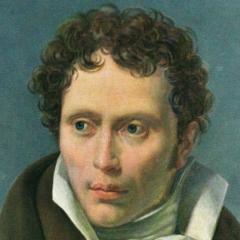
Arthur Schopenhauer
Arthur Schopenhauer was a prominent German philosopher born on February 22, 1788, and died on September 21, 1860. He is one of the most important figures in 19th-century German philosophy and is known for his unique pessimistic philosophical ideas. more
You May Also Like
Source: Your Hour
Source: Your Hour
“Там" якщо й звільняють, то хіба тільки в землю.”
Source: Сад Гетсиманський
Source: St Petersburg Dialogues: Or Conversations on the Temporal Government of Providence
Source: Falling Into Fire
“We exist to end the suffering in men and to end the suffering that men cause.”
Source: Reunion
“Noble endurance is an act of graceful acceptance of existential afflictions.”