“The whole set of stylizations that are known as 'camp' (a word that I was hearing then for the first time) was, in 1926, self-explanatory. Women moved and gesticulated in this way. Homosexuals wished for obvious reasons to copy them. The strange thing about 'camp' is that it has become fossilized. The mannerisms have never changed. If I were now to see a woman sitting with her knees clamped together, one hand on her hip and the other lightly touching her back hair, I should think, 'Either she scored her last social triumph in 1926 or it is a man in drag.' Perhaps 'camp' is set in the 'twenties because after that differences between the sexes—especially visible differences—began to fade. This, of course, has never mattered to women in the least. They know they are women. To homosexuals, who must, with every breath they draw, with every step they take, demonstrate that they are feminine, it is frustrating. They look back in sorrow to that more formal era and try to re-live it. The whole structure of society was at that time much more rigid than it has ever been since, and in two main ways. The first of these was sexual. The short skirts, bobbed hair and flat chests that were in fashion were in fact symbols of immaturity. No one ever drew attention to this, presumably out of politeness. The word 'boyish' was used to describe the girls of that era. This epithet they accepted graciously. They knew that they looked nothing like boys. They also realized that it was meant to be a compliment. Manliness was all the rage. The men of the 'twenties searched themselves for vestiges of effeminacy as though for lice. They did not worry about their characters but about their hair and their clothes. Their predicament was that they must never be caught worrying about either. I once heard a slightly dandified friend of my brother say, 'People are always accusing me of taking care over my appearance.' The sexual meaning of behaviour was only sketchily understood, but the symbolism of clothes was recognized by everyone. To wear suede shoes was to be under suspicion. Anyone who had hair rather than bristle at the back of his neck was thought to be an artist, a foreigner or worse. A friend of mine who was young in the same decade as I says that, when he was introduced to an elderly gentleman as an artist, the gentleman said, 'Oh, I know this young man is an artist. The other day I saw him in the street in a brown jacket.' The other way in which society in the 'twenties was rigid was in its class distinctions. Doubtless to a sociologist there were many different strata merging here and there but, among the people that I was now getting to know, there were only two classes. They never mingled except in bed. There was 'them', who acted refined and spoke nice and whose people had pots of money, and there was 'us', who were the salt of the earth.”
Quote by Quentin Crisp
Work
Browse quotes and source details for this work. more
Author
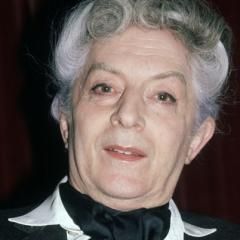
Quentin Crisp (December 25, 1908 – November 21, 1999) was an English writer, actor, and social commentator, best known for his flamboyant style and open homosexuality during a time of widespread prejudice. Born Denis Charles Pratt in Sutton, London, he later adopted the name Quentin Crisp. His 1968 autobiography, 'The Naked Civil Servant,' chronicled his life as an openly gay man in conservative Britain, and was adapted into a critically acclaimed TV film starring John Hurt. Crisp also wrote 'How to Have a Style' and 'Manners from Heaven,' and appeared in films like 'Orlando' and 'The Bride.' He moved to New York in the 1980s, becoming a cultural icon known for his wit and advocacy of individuality. He died in Manchester at age 90. more
You May Also Like
“Most funny women become funny because I have to.”
“Most funny women become funny because they have to.”
“Women seriously needed to come with an instruction manual and a bottle of whiskey.”