Quotessence
Home / Quotes / Quote by Garchen Rinpoche

Quote by Garchen Rinpoche

“There are many thoughts that always arise, but thoughts are impermanent; they come and go. The mind from which they arise, however, abides like space; it never comes and goes. It is always there, it has always been there, and it will always be there. It is like space, or a vast ocean, or a mirror. It never goes anywhere, just like space. Therefore, do not cling to the temporary thoughts. No matter how much you cling to them you cannot actually hold on to them, as they are impermanent by nature. Rather, observe that which never goes away, the clear knowing awareness that recognizes all the thoughts arising. This awareness is the Buddha within you; it is your true nature. Whatever thoughts arise, negative thoughts, sadness, afflictive emotions, do not follow them but continue to observe with mindfulness. When this mindfulness is sustained, arising thoughts will naturally dissipate without the need to abandon them. This awareness must be upheld, not only in meditation sessions, but also during all your activities. No matter what you experience, happiness or suffering, it does not affect your awareness; it always is as it is. This nature is Buddha nature, and every being has it.”

Quote by Garchen Rinpoche

Author
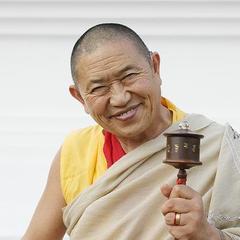
Garchen Rinpoche
Garchen Rinpoche

Garchen Rinpoche, born in 1936, is a mysterious religious leader. His life story and achievements have not been widely documented, and specific information is limited. more

You May Also Like

“There is no way to attain enlightenment on one's own. Such a thing has never happened in infinite aeons. Shravakas and pratyekabuddhas who appear when a buddha is not manifest in this world can realize the twelve branches of interdependent origination and attain arhatship. They aren't, however, able to attain complete enlightenment and cannot benefit beings in a vast way; they can only liberate themselves from the sufferings of cyclic existence, and their realization is far from complete enlightenment. In the Sutrayana, one studies and analyzes the teachings and texts, but no matter how extensive the teachings are, they are all based on the essential nature. The Buddha provided many different levels of teaching, which can be categorized into provisional and definitive meaning. These teachings can be studied, analyzed, and examined, but they're not so easy to understand. For instance, when great scholars, such as khenpos, give detailed Sutrayana teachings, the students listen, reflect on, and analyze the teachings and debate on them. They rely on the texts that they have been taught.”

“As a transmuted energy, anger is mirror-wisdom – undistracted, undistorted clarity. But in order for us to find this clarity, to polish this mirror, we need to cut through the insidious process of justification. Justification is the authority we invoke to license our anger. Because of this it is important not to allow space for the distorted indulgence of justification. This can be very difficult because the process of justification is a strong part of our education and a salient feature of the world’s cultural heritage. The nuclear balance of terror was part of that process. Totalitarian political movements (either extreme left or extreme right) are a manifestation of that process; and, unfortunately, it has also become part of the very ideologies that have arisen to benefit humanity. How often have we heard people saying: “Of course I’m angry! Wouldn’t anyone be angry?” And, of course, this is a purely rhetorical question. The concept that we have every right to feel anything that we feel needs to be called seriously into question. At best we can say that we simply feel what we feel. It is a delicate balance: to acknowledge emotional needs, on the one hand, and to have a sense of these needs being conceptually generated on the other. This balancing act requires the experience of emptiness, because without it, we either indulge ourselves or brutalise ourselves. The experience of emptiness, in this sense, helps us to view our emotions with a degree of humour – with more sanity and true perspective. With this sense of space we can find ourselves adopting a very powerful stance – the stance of a practitioner. Then it is no longer possible to say: “You have made me angry!” All we can say is: “I have made myself angry in reaction to what I have perceived you to have done to me”. In this way we make ourselves completely responsible for what we feel. That is really wonderful, because from this perspective we stop laying this responsibility on other people. Taking responsibility for whatever we may happen to be feeling is what enables us to kill justification. Dechen, Khandro; Chogyam, Ngakpa (2014-01-14). Spectrum of Ecstasy: Embracing the Five Wisdom Emotions of Vajrayana Buddhism (p. 143). Shambhala Publications. Kindle Edition.”

“Ten ma (bsTan Ma [བསྟན་མ་]). Twelve local female spirits of Tibet who have taken the vow from Guru Padmasambhava to protect the Dharma and its followers: the Four Ten mas of the Dud mo [bDud Mo] type: 1) Tshe ring ma (Tshe Ring Ma [ཚེ་རིང་མ་] or Kun Grags Ma [ཀུན་གྲགས་མ་]), 2) Dor je Ya ma kyong (rDo rje gYa Ma sKyong [རྡོ་རྗེ་གཡ་མ་སྐྱོང་]), 3) Kun zang mo (Kun bZang Mo [ཀུན་བཟང་མོ་] and 4) Geg gyi tso (bGegs Kyi gTso [བགེགས་ཀྱི་གཙོ་]; The Four Ten mas of the Nod jin mo (S. Yakṣasi, T. gNod sByin Mo [གནོད་སྦྱིན་མོ་]) type: 1) Chen chig ma (sPyan gChig Ma [སྤྱན་གཅིག་མ་]), 2) Kha ding Lu mo gyal (mKha' lDing Klu Mo rGyal [མཁའ་ལྡིང་ཀླུ་མོ་རྒྱལ་]), 3) Dor je Khyung tsun ma (rDo rje Khyung bTsun Ma [རྡོ་རྗེ་ཁྱུང་བཙུན་མ་]), and 4) Trag mo gyal (Drag Mo rGyal [དྲག་མོ་རྒྱལ་]); The Four Men Mo (sMan Mo [སྨེན་མོ་]): 1) Pod kham kyong (Bod Khams sKyong [བོད་ཁམས་སྐྱོང་]), 2) Men chig ma (sMan gChig Ma [སྨན་གཅིག་མ་]), 3) Yar mo sil (gYar Mo bSil [གཡར་མོ་བསིལ་]), and 4) Dor je Zu le men (rDo rje Zu Le sMan [རྡོ་རྗེ་གཟུགས་ལེགས་སྨན་]).”

“It's good to be aware of all the (buddha) family patterns and to remember that our energy is just energy, and that every form of energy has the potential to be transformed into wisdom. One of the most wonderful things about Vajrayana is that the stronger our afflictions are, the stronger the encumbered patterns, the stronger the wisdom will be. So it's actually considered to be really good for a Vajrayana practitioner to be very passionate or very angry or very lazy, or whatever the dominant obstructing emotion might be, because an equal intensity of that energy will be transformed into wisdom.”

“I am sorry—I know that what you shared was not like other gods and humans.’ ‘It was not. But how would you know that it was not, with everything that you have seen? I want to tell you how it is different, so that you understand.’ Caught up in the joy, my fears and my doubts were a current tugging at me from underneath, but I pushed them down. For now at least, I would not think of them. I would let him talk and hope, this time, that his words would convince me.”