Quotessence
Home / Quotes / Quote by Khaled Hosseini

Quote by Khaled Hosseini

Work

A Thousand Splendid Suns

This novel delves into the lives of two women in Afghanistan, highlighting their struggles and triumphs amidst political turmoil and personal tragedy. The narrative weaves through decades, showcasing the evolving dynamics of their relationships and the resilience of the human spirit in a challenging environment. more

Author
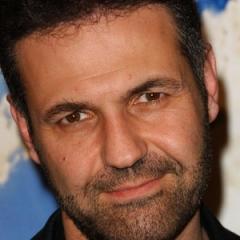
Khaled Hosseini
Khaled Hosseini

Khaled Hosseini is an Afghan-American novelist, best known for his novel 'The Kite Runner,' which has become a global bestseller. The story, centered around themes of friendship, betrayal, and redemption, has resonated with readers worldwide. Hosseini's works often focus on the history and culture of Afghanistan, as well as the complexities of human nature. more

You May Also Like

“Had he actually walked streets of quiet cars, Sunday morning peace of the Tiergarten, so far away? Another life. Ice cream, a taste that could never have existed. Now they boiled nettles and were glad to get them. God, he cried out. Won't they stop? The huge British tanks came on. Another building, it might have been an apartment house or a store, a school or office; he could not tell — the ruins toppled, slid into fragments. Below in the rubble another handful of survivors buried, without even the sound of death. Death had spread out everywhere equally, over the living, the hurt, the corpses layer after layer that already had begun to smell. The stinking, quivering corpse of Berlin, the eyeless turrets still upraised, disappearing without protest like this one, this nameless edifice that man had once put up with pride.”

“My enlistment came a few years after that world-changing day in September 2001. Instead of expounding on where I was that day—we’ve all heard that story from a million different people a million different times—I’ll just say that I, an impressionable teenager, became swept up in the gross manufactured patriotism that emerged from the rubble and cancerous ashes of those fallen towers. It wasn’t the far-right, red-hat-wearing nationalism that’s disguised as the patriotism we see on television today. It was the red, white, and blue bald eagle Bud Light commercial kind of patriotism. The lifted Chevy Silverado with a yellow Support the Troops magnet and truck nuts kind of patriotism. The please rise from your seats, remove your hat, and place your hand over your heart to recite the National Anthem before you watch young men give each other CTE on the gridiron kind of patriotism. And to quote Lee Greenwood, I was “proud to be an American.”

“Everyone has a moment in history which belongs particularly to him. It is the moment when his emotions achieve their most powerful sway over him, and afterward when you say to this person “the world today” or “life” or “reality” he will assume that you mean this moment, even if it is fifty years past. The world, through his unleashed emotions, imprinted itself upon him, and he carries the stamp of that passing moment forever. For me, this moment—four years is a moment in history—was the war. The war was and is reality for me. I still instinctively live and think in its atmosphere. These are some of its characteristics: Franklin Delano Roosevelt is the President of the United States, and he always has been. The other two eternal world leaders are Winston Churchill and Josef Stalin. America is not, never has been, and never will be what the songs and poems call it, a land of plenty. Nylon, meat, gasoline, and steel are rare. There are too many jobs and not enough workers. Money is very easy to earn but rather hard to spend, because there isn’t very much to buy. Trains are always late and “always crowded with “servicemen.” The war will always be fought very far from America and it will never end. Nothing in America stands still for very long, including the people, who are always either leaving or on leave. People in America cry often. Sixteen is the key and crucial and natural age for a human being to be, and people of all other ages are ranged in an orderly manner ahead of and behind you as a harmonious setting for the sixteen-year-olds of this world.”

“When we came here, we came from our mothers and our sweethearts. We were still used to our mothers with their work-hard arms that could clout the strongest of us and leave our ears ringing. And we courted our sweethearts in the country way. Slow, with the fields that ripen at harvest. Fierce, with the sows that rut the earth. Here, without women, with only our imaginations and a handful of whores, we can’t remember what it is about women that can turn a man through passion into something holy. Bible words again, but I am thinking of my father, who shaded his eyes on those sunburnt evenings and learned to take his time with my mother. I am thinking of my mother with her noisy heart and of all the women waiting in the fields for the men who drowned yesterday and all the mothers’ sons who have taken their place. We never think of them here. We think of their bodies and now and then we talk about home but we don’t think of them as they are; the most solid, the best loved, the well known. They go on. Whatever we do or undo, they go on.”

“New recruits cry when they come here and they think about their mothers and their sweethearts and they think about going home. They remember what it is about home that holds their hearts; not sentiment or show but faces they love. Most of these recruits aren’t seventeen and they’re asked to do in a few weeks. What vexes the best philosophers for a lifetime; that is, to gather of their passion for life and make sense of it in the face of death. They don’t know how, but they do know how to forget, and little by little they put aside the burning summer in their body, and all they have instead is lust and rage.”

“I left the bank because they wouldn’t deposit my cheque of poems. So I went to the store, but they didn’t accept my currency of words. So I boxed all my stories and took them to charity. But they refused my donation and asked me to give blood instead. I opened the notebooks and made them look, 'What do you think I wrote these in?”

“هر یکشنبه شب، پس از مراسم شامگاه در نمازخانه ی مدرسه، چتریس نام شاگردان قدیمی را که در جنگ کشته شده بودند می خواند و زندگینامه ی کوتاهی از آنها را چاشنی سخن می کرد. بسیار هیجان انگیز بود؛ اما چیپس، نشسته بر نیمکت دراز نمازخانه، به خود می گفت: برای چتریس آنها چیزی جز نام نیستند؛ او قیافه ی آنها را آن طور که من می بینم، نمی بیند....”

“(Donor Countries) When are we going to understand that donor countries never give anything for free? When are we going to realize that only those with the largest role in destruction offer themselves as benefactors? They donate merely to reshape societies and ravaged lands according to their whims and desires… Their sole aim is to keep the defeated, the marginalized, the disempowered, and the impoverished in that state for as long as possible… When are we going to see that the quickest way to name the world’s greatest criminals is simply to scan the list of donor countries? November 12, 2022”