Quotessence
Home / Quotes / Quote by Beverly Daniel Tatum

Quote by Beverly Daniel Tatum

“One White woman...wrote: '...I acknowledge the need for White students to listen to minority students when they express anger against a system which has failed them without taking this communication as a personal attack.' Indeed, this is what one young woman of color hoped for: 'When I'm participating in a cross-racial dialogue, I prefer that the people I'm interacting with understand why I react the way I do. When I say that I want understanding, it does not mean that I'm looking for empathy. I merely want people to know why I'm angry and not to be offended by it.' In order for there to be meaningful dialogue, fear, whether of anger or isolation, must eventually give way to risk and trust. A leap of faith must be made. It is not easy, and it required being willing to push past one's fear. Wrote one student, 'At times it feels too risky...but I think if people remain equally committed, it can get easier. It's a very stressful process, but I think the consequences of not exploring racial issues are ultimately far more damaging'.”

Quote by Beverly Daniel Tatum

Work

Why are All the Black Kids Sitting Together in the Cafeteria?

The book delves into the reasons behind the common observation of Black students grouping together in school cafeterias, examining the social and psychological factors that contribute to this behavior. It provides insights into the complexities of racial identity and the impact of racial segregation in educational environments. more

Author
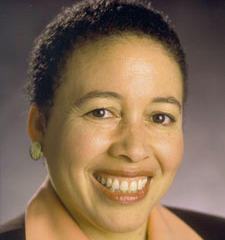
Beverly Daniel Tatum

Beverly Daniel Tatum is an American psychologist and educator, born on September 27, 1954. She is renowned for her research in the fields of race relations and multicultural education, particularly her work on racial identity and racial bias. Professor Tatum teaches psychology at Boston University and has held administrative positions in several academic institutions. more

You May Also Like

“...it is always a bit of a gut punch to realize that someone you have been sitting next to for months or even years secretly harbors view that deny your basic humanity as a black woman. No matter how many times it happens, I have yet to get used to it. ...I really really wanted this to be just a matter of misunderstanding. I really wanted this to be a case where he just didn't know how harmful everyday racism is, and once he did, he would change his mind...It seemed far more important to him that the white people who were spreading and upholding racism be spared the effects of being called racist, than sparing his black friend the effects of that racism. ...That was when I learned that this was not a friend I could take to about this really important part of my life. I couldn't be my full self around him, and he would never truly have my back. He was not safe. I wasn't angry, I was heartbroken.”

“There is no question that American police use their weapons more than police in any other developed democracy. Unfortunately, we don’t have fully accurate information about the number or nature of homicides at the hands of police. Despite a 2006 law requiring the reporting of this information (reauthorized in 2014), many police departments do not comply. Researchers have had to rely on independent information such as local news stories to cobble together numbers. One effort by the Guardian and Washington Post documented 1,100 deaths in 2014, 991 in 2015, and 1,080 in 2016— fewer than in the 1960s and 1970s, but still far too many.”

“A communal outrage inspires what the psychologist Roy Maumeister calls a victim narrative: a moralized allegory in which a harmful act is sanctified, the damage consecrated as irreparable and unforgivable. The goal of the narrative is not accuracy but solidarity. Picking nits about what actually happened is seen as not just irrelevant but sacrilegious or treasonous.”

“When white feminism ignores history, ignores that the tears of white women have the power to get Black people killed while insisting that all women are on the same side, it doesn't solve anything. Look at Carolyn Bryant, who lied about Emmett Till whistling at her in 1955. Despite knowing who had killed him, and that he was innocent of even the casual disrespect she had claimed, she carried on with the lie for another fifty years after his lynching and death”