Quotessence
Home / Quotes / Quote by Aldous Huxley

Quote by Aldous Huxley

Work

Brave New World Revisited

This book is a philosophical and sociological examination of Huxley's original novel, Brave New World, published in 1932. It delves into the novel's concepts of a dystopian society, genetic engineering, and the role of technology in shaping human behavior. The author revisits the themes and examines their relevance to contemporary society. more

Author
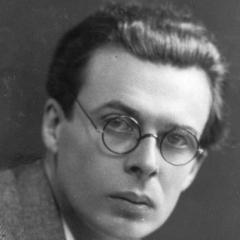
Aldous Huxley
Aldous Huxley

Aldous Huxley was an English writer and philosopher, renowned for his dystopian novel 'Brave New World'. Born on July 26, 1894, in Godalming, Surrey, England, he was the younger brother of the poet and critic Leonard Huxley. Huxley's works frequently delved into the interplay of science, politics, and philosophy, and he was a prominent figure in the literary movement known as the 'Lost Generation'. He passed away on November 22, 1963. more

You May Also Like

“An unarticulated crush is very different from an unrequited one, because at least with an unrequited crush you know what the hell you're doing, even if the other person isn't doing it back. An unarticulated crush is harder to grapple with, because it's a crush that you haven't even admitted to yourself. The romantic forces are all there -- you want to see him, you always notice him, you treat every word from him as if it weighs more than anyone else's. But you don't know why. You don't know that you're doing it. You'd follow him to the end of the earth without ever admitting that your feet were moving.”

“Bo obawiać się śmierci, obywatele, to nic innego nie jest, jak tylko mieć się za mądrego, choć się nim nie jest. Bo to znaczy myśleć, że się wie to, czego człowiek nie wie. Bo przecież o śmierci żaden człowiek nie wie, czy czasem nie jest dla nas największym ze wszystkich dobrem, a tak się jej ludzie boją, jakby dobrze wiedzieli, że jest największym złem. A czyż to nie jest głupota, i to ta najpaskudniejsza myśleć, że się wie to, czego człowiek nie wie? ~ Platon, Obrona Sokratesa (w przekładzie Władysława Witwickiego)”

“W piątym wieku większym powodzeniem cieszyć się musiąła filozofia inna, przywieziona też z wybrzeży jońskich, ale rozwinięta i ugruntowana na ziemi ateńskiej. Poczęła się w głowie zaciętego arystokraty, który na tłum ciemny i demokratyczny patrzał z góry i ze wstrętem, a jednak myśli jego rozwinięte przez innych miały być dla niejednego członka demokracji ateńskiej drabiną w karierze i osią poglądu na świat. Oto w gorących czasach powstania Jończyków i Maratonu pisał Heraklit z Efezu w Azji Mniejszej dzieła niełatwe do czytania, bo nie pisał dla wszystkich, ale dla siebie i dla kilku. Nie odpowiadał mu eleacki byt niezmienny, stały, wiecznie jeden i ten sam. Świat pełen ciągłych, tysiącznych, prawidłowych zmian przedstawiał mu się jak falująca powierzchnia morza, coraz to inna, a prawidłowa i pozornie wciąż ta sama; niby płomień migotliwy, który ani chwili nie trwa w jednakiej formie, tak jak trwa bryła lodu; uważał, że świat to ciągła odmiana, ciągłe rozdwojenie i walka sprzecznych pierwiastków. Jednakże nie chaos, bo w walce tej jest pewien sens; szereg pędzących zmian jest rozumny; jest w tym wszystkim pewna myśl, pewien mus, konieczność; wszechświat jako całość jest niby akord harmonijny, mimo cale zróżnicowanie elementów składowych, jest niby melodia coraz to inna, a jednak określona i prawidłowa. Spoczynku, trwania, martwoty w świecie nie masz. Jak przydrożne topole mijają człowieka pędzącego na wozie i są coraz to inne, mimo że jedna przypomina drugą, tak mijają nas, pędzących ku mecie śmierci, chwile i rzeczy pozornie tylko te same, a naprawdę wciąż o jedną chwilę starsze, wciąż o jakąś choćby odrobinę inne. Nic nie jest ani przez chwilę jednym i tym samym; dwa razy do „tej samej” rzeki nie wstąpisz. Świat jest jak rzeka albo jak płomień.”

“Just like the myth of the people’s or popular capitalism, which was propagated since the mid1950s in the countries to the west of Berlin Wall, to the east and the north of it, since the same time it was introduced the myth of the people’s or popular socialism. But the suggestion is always the same. Under any “people’s” power—from people’s capitalism to people’s socialism—the greatest illusion suggested to the oppressed classes is that the people are sovereign, i.e., that all the people dominate over themselves. In this respect, even John Kenneth Galbraith makes Marxist conclusions, which even in the Internet epoch have the same power: “Young people are suggested that in a democracy the entire power belongs to the people!” (“The Anatomy of Power”) Yet, old people know that this is not true!”