Quotessence
Home / Quotes / Quote by Margaret Mitchell

Quote by Margaret Mitchell

“Food! Food! Why did the stomach have a longer memory than the mind? Scarlett could banish heartbreak but not hunger and each morning as she lay half asleep, before memory brought back to her mind war and hunger, she curled drowsily expecting the sweet smells of bacon frying and rolls baking. And each morning she sniffed so hard to really smell the food she woke herself up.”

Quote by Margaret Mitchell

Work

Gone with the wind

Margaret Mitchell's 'Gone with the Wind' is a sweeping historical romance that follows the adventures of Scarlett O'Hara, a headstrong and ambitious woman living in the American South. The story spans the tumultuous years of the Civil War and the subsequent Reconstruction era, capturing the social and political changes that reshape the lives of its characters. Known for its vivid portrayal of the antebellum South and its characters, the novel has become a staple of American literature. more

Author

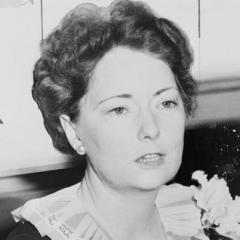
Margaret Mitchell
Margaret Mitchell

Margaret Mitchell, an American author born on November 8, 1900, and died on August 16, 1949, is best known for her novel 'Gone with the Wind'. This historical novel, set against the backdrop of the American Civil War and Reconstruction, has won the hearts of readers worldwide. more

You May Also Like

“Is this a holy thing to see, In a rich and fruitful land, Babes reduced to misery, Feed with cold and usurous hand? Is that trembling cry a song? Can it be a song of joy? And so many children poor? It is a land of poverty! And their sun does never shine, And their fields are bleak & bare, And their ways are fill'd with thorns; It is eternal winter there. For where-e'er the sun does shine, And where-e'er the rain does fall, Babe can never hunger there, Nor poverty the mind appall.”

“Profiteers were taking a hand and purveying at enormous prices essential foodstuffs not available in the shops. The result was that poor families were in great straits, while the rich went short of practically nothing. Thus, whereas plague by its impartial ministrations should have promoted equality among our townsfolk, it now had the opposite effect and, thanks to the habitual conflict of cupidities, exacerbated the sense of injustice rankling in men’s hearts. They were assured, of course, of the inerrable equality of death, but nobody wanted that kind of equality.”

“[We] believe, or assume to believe, that [we] satisfy [our] duty to [humanity] if [we] first provide fully for [our] own material wants and then pay [our] tribute to the universal provider by giving a little to the poor. But if [we] were scrupulously just there would be no poor to whom we could give alms and think that we had realized the merit of benevolence. Better than charity, better than giving of our surplus is conscientious and scrupulously fair conduct and a helping hand in need.”

“What we forget, if we ever knew, is that what we know now about status and wealth creation and sacrifice are predicated on who we are — that is, not poor. If you change the conditions of your not-poor status, you change everything you know as a result of being a not-poor. You have no idea what you would do if you were poor until you are poor. And not intermittently poor or formerly not-poor, but born poor, expected to be poor, and treated by bureaucracies, gatekeepers, and well-meaning respectability authorities as inherently poor. Then, and only then, will you understand the relative value of a ridiculous status symbol to someone who intuits that they cannot afford to not have it.”

“С малка торба и със няколко къшея човекът преживяше тъжната зима. Лежи незавит. А мястото - същото - студена скамейка и снежна градина. Той хляба в дланта си корава сковава по навик го гали и тайно въздиша. От болка по-жълт глухо изгревът пада. И падат със него премръзнали птици. И просякът, брат им, веднага споделя трохите на своята улична участ. Щастлив е в студената птича неделя, макар че животът е жалка минута. Площадите шумни не виждат доброто, ненужно за тях... като стара хартия. Но просякът там е. И тихо, и скромно сърцата на всички в гърдите му бият.”

“You may be the only person left who believes in you, but it's enough. It takes just one star to pierce a universe of darkness. Never give up.”

“Museums alone cannot ease the tensions that come from the debates surrounding the fluidity of national identity in the twenty-first century. Nor can any cultural institution solve the problems of poverty, racial injustice, and police violence. But museums can contribute to understanding by creating spaces where debates are spirited but reasoned. Where contemporary challenges are addressed through contextualization and education.”