“There is a theoretical framework that explains ethnocentrism. As the Belgian authority on ethnic relations Pierre L. van den Berghe put it more than 25 years ago, “The degree of cooperation between organisms can be expected to be a direct function of the proportion of the genes they share; conversely, the degree of conflict between them is an inverse function of the proportion of shared genes.” Van den Berghe used the word “organisms” because he found this principle true in animals as well as people. When there is great genetic distance between strangers—in the case of humans, when they are of different races—conflicts are sharper. It is easy to understand the first part of van den Berghe’s proposition. People everywhere make great sacrifices for their families. The evolutionary explanation is that everyone shares more copies of his distinctive genes with close kin than with strangers. All forms of life can be viewed as striving to pass on their genes to future generations. Each individual therefore has a “genetic interest” in close relatives, which helps explain solidarity and cooperation within families.”
Quote by Jared Taylor
Work
White Identity: Racial Consciousness in the 21st Century
Browse quotes and source details for this work. more
Author
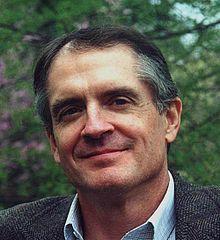
Jared Taylor
Jared Taylor, born on September 15, 1951, is an American journalist known for his views on racism and immigration issues. He was the editor of 'American Renaissance' magazine and has contributed articles to various publications, including 'The American Conservative' and 'The New American'. more
You May Also Like
Source: White Identity: Racial Consciousness in the 21st Century
Source: White Identity: Racial Consciousness in the 21st Century
Source: White Identity: Racial Consciousness in the 21st Century
Source: White Identity: Racial Consciousness in the 21st Century
Source: Dangerous Girls
Source: White Identity: Racial Consciousness in the 21st Century
Source: Good Talk: A Memoir in Conversations
Source: The Weight of the Stars
Source: Dreams of the Immortal City Savannah
Source: Daisy Jones & The Six