Quotessence
Home / Quotes / Quote by Aleister Crowley

Quote by Aleister Crowley

“We have seen that it is presumptuous and impractical to lay down definite rules as to what we are to do. What does concern us is so to arrange matters that we are free to do anything that may become necessary or expedient, allowing for that development of supernormal powers which enables us to carry out our plans as they form in the mutable bioscope of events.”

Quote by Aleister Crowley

Author
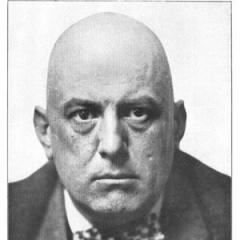
Aleister Crowley
Aleister Crowley

Aleister Crowley, a British poet, mystic, and writer, was born on October 12, 1875, and died on December 1, 1947. He is known for his poetic works and mystical practices, and is considered one of the most controversial figures of the 20th century. more

You May Also Like

“It is slow, gradual pressure that is the formula for both genius and earthquakes. Life tells us our secrets in these cracks, the way events conspire with each other in hidden grottos. This movement is at times very subtle, over a long time, like plate tectonics. If you don't have the right eyes, you might miss these patterns altogether. Although our lives do not occur in geological scales of time, it is still the gradual pressure and our minute reactions, our habits, that actually speak of our true natures. Our true will and intent is contained in potential within each of us, though in many it is buried very, very deep.”

“In terms of action, Dzogchen is not limited by any rules; therefore, no action is forbidden as such. Rather, Dzogchen practice aims at bringing immediate Awareness into every action, and the manifestation of that Intrinsic Awareness is one's true will. Awareness and intention are not at war with each other but are integrated. In the state of contemplation, the Bodhicitta compassion is natural and spontaneous; it is not contrived or created by mind. But this is true only when we are in the state of contemplation. The state of Rigpa is beyond karma and its consequences, beyond good and evil, but our ordinary dualistic consciousness is most definitely not. Being primordially pure, Rigpa is beyond selfish motivations, and all its actions are spontaneously self-perfected. All this is true of contemplation, but if we merely claim to be a Siddha, announcing proudly, 'I am in a state of Rigpa!' and do as we like, following every impulse and indulging all transient desires, we merely delude ourselves and will suffer the karmic consequences. To think we are in the state is not the same as actually being in the state. The only rule in Dzogchen is to be aware. Dzogchen teaches us to take responsibility for our actions, and this is what awareness means. We are always aware of what we do and also of the consequences that each action entails. Integration with movement is not at all the same as attachment, for the latter represents a lack of awareness.”

“Wesley's theology was, then, largely a theology of reaction. Most of his theological output had polemical overtones, and some works were devoted exclusively to that end. The direction and the intensity of the challenge determined the character and strength of his reply. When this is taken into account, there is no contradiction between his teaching on Baptism and on the Lord's Supper. The Protestant and Catholic strands in Wesley's thought are held together in both cases, but the expression of their relative importance depends on the situation which is being addressed.”

“I therefore hold the legendary Jesus in no way responsible for the trouble: it began with Luther, perhaps, and went on with Wesley; but no matter! — what I am trying to get at is the religion which makes England to-day a hell for any man who cares at all for freedom. That religion they call Christianity; the devil they honour they call God. I accept these definitions, as a poet must do, if he is to be at all intelligible to his age, and it is their God and their religion that I hate and will destroy.”

“If I have dealt at some length with this single side of Wesley's character-I mean his preoccupation with strange psychological disturbances, now commonly minimized-it is because I think he, and the other prophets of the Evangelical movement, have succeeded in imposing upon English Christianity a pattern of their own. They have succeeded in identifying religion with a real or supposed experience. I say 'real or supposed', because in the nature of things you cannot prove the validity of any trance, vision, or ecstasy; it remains something within the mind. Still less can you prove the validity of a lifelong Christ-inspired attitude; in the last resort, all it proves is that certain psychological influences are strong enough to overcome, in a given case, all the temptations towards backsliding which a cynical world affords. But, for better or worse, the England which weathered the excitements and disappointments of the early nineteenth century was committed to a religion of experience; you did not base your hopes on this or that doctrinal calculation; you knew. For that reason the average Englishman was, and is, singularly unaffected by reasonings which would attempt to rob him of his theological certainties, whatever they may be. For that reason, also, he expects much (perhaps too much) of his religion in the way of verified results; he is easily disappointed if it does not run according to schedule. It must chime in with his moods, rise superior to his temptations; a decent average of special providences must convince him that it works. Otherwise, though without rancour, he abandons the practice of it. He is not prepared for that unrewarded adventure of naked faith which is, for the Quietist, the common lot of Christians. Not on the scale, but in the spirit, of those eighteenth-century pioneers, he demands 'heart-work'. And, in days when we are apparently less moved by the crowd-appeal, it is hard to come by.”