Quotessence
Home / Quotes / Quote by Mahatma Gandhi

Quote by Mahatma Gandhi

Author

Mahatma Gandhi
Mahatma Gandhi

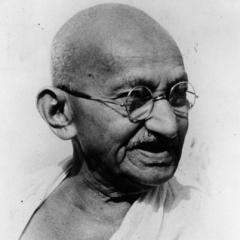
A leader of the Indian independence movement, lawyer, politician, and social activist, Mahatma Gandhi is revered as the 'Father of the Nation'. He advocated for non-violence and unity between Hindus and Muslims, leading the Indian struggle for independence and profoundly influencing history both in India and around the world. more

You May Also Like

“In Theravāda Buddhist traditions, monks represent ideal behavior to the laity. This is partly due to their unworldly aspirations (laukika), but it also has much to do with the fact that the standardized discourse on ethics, known as the Vinaya Piṭaka, is located within the monastic guidelines. This source provides rules of conduct for monks and simultaneously serves as a moral compass for the laity.”

“The aim of far too many teachings these days is to make people "feel good," and even some Buddhist masters are beginning to sound like New Age apostles. Their talks are entirely devoted to validating the manifestation of ego and endorsing the "rightness" of our feelings, neither of which have anything to do with the teachings we find in the pith instructions. So, if you are only concerned about feeling good, you are far better off having a full body massage or listening to some uplifting or life-affirming music than receiving dharma teachings, which were definitely not designed to cheer you up. On the contrary, the dharma was devised specifically to expose your failings and make you feel awful.”

“Just calling one's practice "approach and accomplishment" and staying in retreat for years will produce nothing but hardship. Completing hundreds of millions of mantras will not even bring the warmth of the ordinary qualities that mark one's progress on the path! In other words, if the essential points of the path are not taken into account, perseverance will amount to nothing more than chasing a mirage.”

“Students often ask if they should only invoke the guru in the context of a formal daily practice, or if it can be done anywhere. The answer is that it depends on the student. Dharma bums who roam the streets of Kathmandu smoking hashish and sitting in cafés nursing a half-empty cup of cappuccino for most of the day should probably sit formally and recite ten million or one hundred million mantras. Whereas those who have demanding jobs in London, New York or Paris might benefit more from reciting the mantra on their way to work, or as they wait for a bus. The method each student is given will depend entirely on their personal situation and how disciplined they are.”

“There are many thoughts that always arise, but thoughts are impermanent; they come and go. The mind from which they arise, however, abides like space; it never comes and goes. It is always there, it has always been there, and it will always be there. It is like space, or a vast ocean, or a mirror. It never goes anywhere, just like space. Therefore, do not cling to the temporary thoughts. No matter how much you cling to them you cannot actually hold on to them, as they are impermanent by nature. Rather, observe that which never goes away, the clear knowing awareness that recognizes all the thoughts arising. This awareness is the Buddha within you; it is your true nature. Whatever thoughts arise, negative thoughts, sadness, afflictive emotions, do not follow them but continue to observe with mindfulness. When this mindfulness is sustained, arising thoughts will naturally dissipate without the need to abandon them. This awareness must be upheld, not only in meditation sessions, but also during all your activities. No matter what you experience, happiness or suffering, it does not affect your awareness; it always is as it is. This nature is Buddha nature, and every being has it.”

“There is no way to attain enlightenment on one's own. Such a thing has never happened in infinite aeons. Shravakas and pratyekabuddhas who appear when a buddha is not manifest in this world can realize the twelve branches of interdependent origination and attain arhatship. They aren't, however, able to attain complete enlightenment and cannot benefit beings in a vast way; they can only liberate themselves from the sufferings of cyclic existence, and their realization is far from complete enlightenment. In the Sutrayana, one studies and analyzes the teachings and texts, but no matter how extensive the teachings are, they are all based on the essential nature. The Buddha provided many different levels of teaching, which can be categorized into provisional and definitive meaning. These teachings can be studied, analyzed, and examined, but they're not so easy to understand. For instance, when great scholars, such as khenpos, give detailed Sutrayana teachings, the students listen, reflect on, and analyze the teachings and debate on them. They rely on the texts that they have been taught.”

“As a transmuted energy, anger is mirror-wisdom – undistracted, undistorted clarity. But in order for us to find this clarity, to polish this mirror, we need to cut through the insidious process of justification. Justification is the authority we invoke to license our anger. Because of this it is important not to allow space for the distorted indulgence of justification. This can be very difficult because the process of justification is a strong part of our education and a salient feature of the world’s cultural heritage. The nuclear balance of terror was part of that process. Totalitarian political movements (either extreme left or extreme right) are a manifestation of that process; and, unfortunately, it has also become part of the very ideologies that have arisen to benefit humanity. How often have we heard people saying: “Of course I’m angry! Wouldn’t anyone be angry?” And, of course, this is a purely rhetorical question. The concept that we have every right to feel anything that we feel needs to be called seriously into question. At best we can say that we simply feel what we feel. It is a delicate balance: to acknowledge emotional needs, on the one hand, and to have a sense of these needs being conceptually generated on the other. This balancing act requires the experience of emptiness, because without it, we either indulge ourselves or brutalise ourselves. The experience of emptiness, in this sense, helps us to view our emotions with a degree of humour – with more sanity and true perspective. With this sense of space we can find ourselves adopting a very powerful stance – the stance of a practitioner. Then it is no longer possible to say: “You have made me angry!” All we can say is: “I have made myself angry in reaction to what I have perceived you to have done to me”. In this way we make ourselves completely responsible for what we feel. That is really wonderful, because from this perspective we stop laying this responsibility on other people. Taking responsibility for whatever we may happen to be feeling is what enables us to kill justification. Dechen, Khandro; Chogyam, Ngakpa (2014-01-14). Spectrum of Ecstasy: Embracing the Five Wisdom Emotions of Vajrayana Buddhism (p. 143). Shambhala Publications. Kindle Edition.”