“But what is the use of the humanities as such? Admittedly they are not practical, and admittedly they concern themselves with the past. Why, it may be asked, should we engage in impractical investigations, and why should we be interested in the past? The answer to the first question is: because we are interested in reality. Both the humanities and the natural sciences, as well as mathematics and philosophy, have the impractical outlook of what the ancients called vita contemplativa as opposed to vita activa. But is the contemplative life less real or, to be more precise, is its contribution to what we call reality less important, than that of the active life? The man who takes a paper dollar in exchange for twenty-five apples commits an act of faith, and subjects himself to a theoretical doctrine, as did the mediaeval man who paid for indulgence. The man who is run over by an automobile is run over by mathematics, physics and chemistry. For he who leads the contemplative life cannot help influencing the active, just as he cannot prevent the active life from influencing his thought. Philosophical and psychological theories, historical doctrines and all sorts of speculations and discoveries, have changed, and keep changing, the lives of countless millions. Even he who merely transmits knowledge or learning participates, in his modest way, in the process of shaping reality - of which fact the enemies of humanism are perhaps more keenly aware than its friends. It is impossible to conceive of our world in terms of action alone. Only in God is there a "Coincidence of Act and Thought" as the scholastics put it. Our reality can only be understood as an interpenetration of these two.”
Quote by Erwin Panofsky
Work
Meaning in the Visual Arts
Browse quotes and source details for this work. more
Author
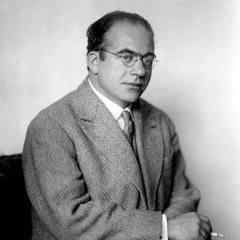
Erwin Panofsky
German art historian known for his research on the Renaissance period. Panofsky introduced many innovative theories in the field of art history, which had a profound impact on subsequent research in the discipline. more
You May Also Like
“What my portraits are made of? 10% showing the reality, 90% showing my philosophy.”
Source: The Lost Flowers of Alice Hart
Source: Poesía vertical: Antología
Source: Overcoming Mediocrity: Limitless Women
“El lenguaje [...] nunca fue diseñado para entenderse, sino para confundirse.”
Source: El viaje al amor: Las nuevas claves científicas
Source: Hollow Hallows
Source: On the Road
Source: Salazar: Citações