Quotessence
Home / Quotes / Quote by Albert Camus

Quote by Albert Camus

“Brutality is never temporary. It does not respect the boundaries set for it, and so it is natural that brutality will spread, first corrupting art, then life. Then, out of the misfortunes and bloodshed of humankind, we see born insignificant literature, frivolous newspapers, photographed portraits, and youth-club plays in which hatred replaces religion. Art then ends up in forced optimism, which is precisely the worst of indulgences, and the most pathetic of lies.”

Quote by Albert Camus

Work

Create Dangerously

Browse quotes and source details for this work. more

Author

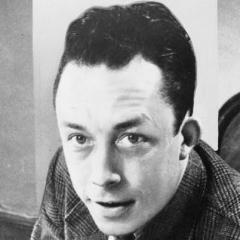
Albert Camus
Albert Camus

Albert Camus was a French author and philosopher, born on November 7, 1913, and died on January 4, 1960. Known for his unique existentialist philosophy and profound insights into human suffering, Camus' works include 'The Stranger', 'The Plague', and 'The Myth of Sisyphus', which have had a profound impact on 20th-century literature. more

You May Also Like

“One man thinks justice consists in paying debts, and has no measure in his abhorrence of another who is very remiss in this duty and makes the creditor wait tediously. But that second man has his own way of looking at things; asks himself Which debt must I pay first, the debt to the rich, or the debt to the poor? the debt of money or the debt of thought to mankind, of genius to nature? For you, O broker, there is not other principle but arithmetic. For me, commerce is of trivial import; love, faith, truth of character, the aspiration of man, these are sacred;”

“Радость. Долг каждого человека - взращивать свою внутреннюю радость. Но многие религии забыли это правило. Большинство храмов темны и холодны. Литургическая музыка помпезна и грустна. Священники одеваются в черное. Ритуалы прославляют пытки мучеников и соперничают в изображении жестокостей. Как если бы мучения, которые претерпели их пророки, были свидетельствами их истинности. Не является ли радость жизни лучшим способом отблагодарить Бога за его существование, если он существует? А если Бог существует, почему он должен быть мрачным существом?”

“Swansea is a town where art is alive. If it became a cultural centre or a resort where art was fashionable and where it was always being discussed but never being created, it would be a town where art was dead... There is no room in Swansea to be pompous without becoming ludicrous, and all the pompous aspects of Swansea are ludicrous; but the town itself, the town of windows between hills and the sea, is unforgettable. What should Swansea become? It should, I think, generate its own species and become what it is now, a town where art is alive.”

“they would be astonished to discover the seriously German problem that we are dealing with, a vortex and a turning-point at the very centre of German hopes. But perhaps those same people will find it distasteful to see an aesthetic problem taken so seriously, if they can see art as nothing more than an entertaining irrelevance, an easily dispensable tinkle of bells next to the 'seriousness of life': as if no one was aware what this contrast with the 'seriousness of life' amounted to. Let these serious people know that I am convinced that art is the supreme task and the truly metaphysical activity of this life in the sense of that man, my noble champion on that path, to whom I dedicate this book.”

“Beauty, it seemed to Amineh, did not have to be extraordinary to be cherished. Maybe that was its secret, that it lived in the most common expressions of man and nature. The artisan had discovered it in a block of wood, which he had carved into a scene of a young woman sitting at a window. The locals had created it through the colorful geraniums they placed on small protrusions covering every square meter of their adobe walls. Even the animals were not immune. Who could doubt the starlings’ ecstatic flight around the minarets of the mosque was inspired by the symmetry of that aging structure.”