Quotessence
Home / Quotes / Quote by Jane Austen

Quote by Jane Austen

“Without thinking highly either of men or matrimony, marriage had always been her object; it was the only provision for well-educated young women of small fortune, and however uncertain of giving happiness, must be their pleasantest preservative from want. This preservative she had now obtained; and at the age of twenty-seven, without having ever been handsome, she felt all the good luck of it.”

Quote by Jane Austen

Work

Pride and Prejudice

Written by Jane Austen, this renowned novel delves into the complexities of human nature, societal expectations, and the transformative power of love. The story follows Elizabeth Bennet, a spirited and intelligent woman, and her evolving relationship with the aloof and proud Mr. Darcy. Set in early 19th-century England, the narrative examines the challenges of overcoming pride and prejudice to find true happiness. more

Author

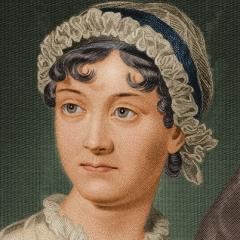
Jane Austen
Jane Austen

Jane Austen, born on December 16, 1775, and died on July 18, 1817, was a renowned English novelist of the 19th century. Known for her exquisite psychological portrayals and satirical humor, Austen's works mainly revolve around rural life in England, depicting the customs and interpersonal relationships of the time. Her representative works include 'Pride and Prejudice' and 'Sense and Sensibility'. more

You May Also Like

“In 2011, when then prime minister Julia Gillard based her opposition to the legal recognition of gay marriage in Australia on her strident belief in the traditional definition of marriage, we could all be forgiven for not knowing exactly which tradition she meant. Was it the tradition of marriage as a contract made between parents to connect kinship groups and reinforce economic and political power? Was it the tradition of marriage as a means to extend family influence into different geographical territories? Was it marriage as a tool for class consolidation or mobility? Was it marriage as a vehicle for women to escape their status as the property of their fathers to become instead the proprty of their husbands? Or was she referring to the tradition of marriage as cemented relatively recently in Australian legalese, to define marriage by what it is not? That is, it is not something that happens bteween a brother and a sister (though it can happen between cousins, or uncle and niece), nor a decision arrived at by force (though what constitutes 'force' is not defined), and it is definitely not the result of a same-sex couple eloping to a more liberal state for a party and a bogus piece of paper. Nevertheless, w all know that every marriage is different, and none can wholly be summed up be a sntence-long definition.”