Quotessence
Home / Quotes / Quote by Washington Irving

Quote by Washington Irving

“Я заметил уже, что это был простой, добродушный малый; больше того, он был хороший сосед и покорный, забитый супруг. Последнему обстоятельству он и был обязан, по-видимому, той кроткостью духа, которая снискала ему всеобщую любовь и широкую популярность, ибо наиболее услужливыми и покладистыми вне своего дома оказываются мужчины, привыкшие повиноваться сварливым и вечно бранящимся женам. Их нрав, пройдя через огненное горнило домашних невзгод, становится, вне всякого сомнения, гибким и податливым, ибо супружеские нахлобучки лучше всех проповедей на свете научают человека добродетели терпения и послушания. Вот почему сварливую жену в некоторых отношениях можно считать благословением неба, а раз так, Рип ван Винкль был благословен трижды.”

Quote by Washington Irving

Work

Rip Van Winkle

Browse quotes and source details for this work. more

Author

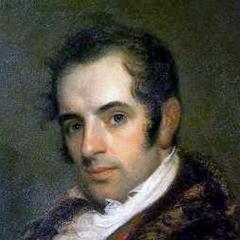
Washington Irving
Washington Irving

Washington Irving was an American author known for his significant contributions to American literature. His works, including 'The Legend of Sleepy Hollow' and 'Rip Van Winkle', have had a profound impact on American literature. more

You May Also Like

“He would never marry again. Marriage was for idiots. It was a bygone solution to a property problem he didn’t have. It was a social construct invented by religious people (whose other values he mostly rejected) whose participants lived not past age thirty at the time it was implemented. So, no. He was not going to be falling into that particular trap again. He would have relationships and excitement and he would never put his emotional health into somebody’s hands like that ever again.”

“A wife isn’t like an ultra-girlfriend or a permanent girlfriend. She’s an entirely new thing. She’s something you made together, with you as an ingredient. She couldn’t be the wife without you. So hating her or turning on her or talking to your friends about the troubles you have with her would be like hating your own finger. It’s like hating your own finger even after it becomes necrotic. You don’t separate yourself from it. You look at your wife and you’re not really looking at someone you hate. You’re looking at someone and seeing your own disabilities and your own disfigurement. You’re hating your creation. You’re hating yourself.”

“You could consider marrying an excellent woman?' I asked in amazement. 'But they are not for marrying.' 'You're surely not suggesting that they are for the other things?' he said, smiling. That had certainly not occurred to me and I was annoyed to find myself embarrassed. 'They are for being unmarried,' I said, 'and by that I mean a positive rather than a negative state.”

“Love has given me great pleasure but takes up too much time. I have often been in love. I am surprised when someone loves me. I do not consider myself handsome just because a woman thinks so. I sometimes feel like an imposter without knowing why, as if a shadow falls over me and I can't make it go away. If over time a woman I'm seeing starts to use the expressions I do, I may begin to pity her. I have left a woman because I didn't love her anymore and didn't like the way I was around her. I find something pleasant in the pain of a fading love. I have more good memories than bad ones. I masturbate less to pictures than to memories. I would like to have myself hypnotised by my wife, but I'm not married.”

“If a young man gets married, starts a family, and spends the rest of his life working at a soul-destroying job, he is held up as an example of virtue and responsibility. The other type of man, living only for himself, working only for himself, doing first one thing and then another simply because he enjoys it and because he has to keep only himself, sleeping where and when he wants, and facing woman when he meets her, on equal terms and not as one of a million slaves, is rejected by society. The free, unshackled man has no place in its midst.”

“My funeral," the Blue Man said. "Look at the mourners. Some did not even know me well, yet they came. Why? Did you ever wonder? Why people gather when others die? Why people feel they should? "It is because the human spirit knows, deep down, that all lives intersect. That death doesn't just take someone, it misses someone else, and in the small distance between being taken and being missed, lives are changed. "You say you should have died instead of me. But during my time on earth, people died instead of me, too. It happens every day. When lightning strikes a minute after you are gone, or an airplane crashes that you might have been on. When your colleague falls ill and you do not. We think such things are random. But there is a balance to it all. One withers, another grows. Birth and death are part of a whole. "It is why we are drawn to babies . . ." He turned to the mourners. "And to funerals.”

“In this martial world dominated by men, women had little place. The Church's teachings might underpin feudal morality, yet when it came to the practicalities of life, a ruthless pragmatism often came into play. Kings and noblemen married for political advantage, and women rarely had any say in how they or their wealth were to be disposed in marriage. Kings would sell off heiresses and rich widows to the highest bidder, for political or territorial advantage, and those who resisted were heavily fined. Young girls of good birth were strictly reared, often in convents, and married off at fourteen or even earlier to suit their parents' or overlord's purposes. The betrothal of infants was not uncommon, despite the church's disapproval. It was a father's duty to bestow his daughters in marriage; if he was dead, his overlord or the King himself would act for him. Personal choice was rarely and issue. Upon marriage, a girl's property and rights became invested in her husband, to whom she owed absolute obedience. Every husband had the right to enforce this duty in whichever way he thought fit--as Eleanor was to find out to her cost. Wife-beating was common, although the Church did at this time attempt to restrict the length of the rod that a husband might use.”