Quotessence
Home / Quotes / Quote by Billy Crystal

Quote by Billy Crystal

“Nothing can take the sting off the world's economic problems like watching millionaires present each other golden statues.”

Quote by Billy Crystal

Author
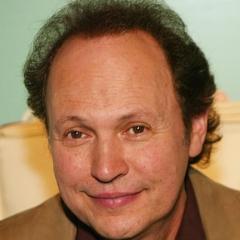
Billy Crystal
Billy Crystal

Billy Crystal is a renowned American actor, comedian, and screenwriter, born on March 14, 1948. He has achieved great success in the film and television industry with his unique sense of humor and acting talent. Crystal has starred in many films, such as 'When Harry Met Sally' and 'City Slickers', and was nominated for an Academy Award for Best Actor for his performance in 'When Harry Met Sally'. more

You May Also Like

“Popularity at the box office did not translate into support from [director John Sturges'] peers in the Academy. In February, when Oscar nominations were announced, The Great Escape had to make do with one, for [Ferris] Webster’s editing. Paramount’s Hud and UA’s Tom Jones, which would bring Tony Richardson the best-director Oscar, dominated the field. Sturges’s rightful place in the best-picture category was taken by 20th Century Fox’s Cleopatra, a lavish flop.”

“We hated the gym. We loved it. We escaped to it. We avoided it. We had complicated relationships with our bodies, while at the same time insisting that we loved them unconditionally. We were sure we had better, more important things to do than worry about them, but the slender yoga bodies of moms in Lululemon at school pickup taunted us. Their figures hinted at wheatgrass shots, tennis clubs, and vagina steaming treatments. We found them aspirational. So we sweated on the elliptical and lifted ten-pound weights, inching closer to the bodies we told ourselves we were too evolved to want.”

“The houses were left vacant on the land and the land was vacant because of this. Only the tractor sheds of corrugated iron, silver and gleaming were alive, and they were alive with metal and gasoline and oil, discs of the plows shining. The tractors had lights shining, for there is no day and night for a tractor, and the discs turn the earth in the darkness and they glitter in the daylight. And when a horse stops work and goes into the barn, there is a life and vitality left. There is a breathing and a warmth, and the feet shift on the straw, and the jaws champ on the hay, and the ears and the eyes are alive. There is a warmth of life in the barn and the heat and smell of life, but when the motor of a tractor stops it is as dead as the ore it came from. The heat goes out of it like the living heat that leaves a corpse. Then the corrugated iron doors are closed and the tractor man drives home to town, perhaps twenty miles away, and he need not come back for weeks or months, for the tractor is dead. And this is easy and efficient. So easy, that the wonder goes out of work. So efficient, that the wonder goes out of land, the working of it, and with the wonder, the deep understanding and the relation. And in the tractor man the grows the contempt that comes only to a stranger who has little understanding and no relation, for nitrates are not the land, nor phosphates, and the length of fiber in the cotton is not the land. Carbon is not a man, nor salt, water, nor calcium. He is all these, but he is much more, much more. And the land is so much more than its analysis. The man who is more than his chemistry walking on the earth, turning his plow point for a stone, dropping his handles to slide over an outcropping, kneeling in the earth to eat his lunch, that man who is more than his elements knows the land that is more than it's analysis. But the machine man, driving a dead tractor on land he does not know and love understands only chemistry, and he is contemptuous of the land and of himself. When the corrugated iron doors are shut he goes home, and his home is not the land.”