“The houses were left vacant on the land and the land was vacant because of this. Only the tractor sheds of corrugated iron, silver and gleaming were alive, and they were alive with metal and gasoline and oil, discs of the plows shining. The tractors had lights shining, for there is no day and night for a tractor, and the discs turn the earth in the darkness and they glitter in the daylight. And when a horse stops work and goes into the barn, there is a life and vitality left. There is a breathing and a warmth, and the feet shift on the straw, and the jaws champ on the hay, and the ears and the eyes are alive. There is a warmth of life in the barn and the heat and smell of life, but when the motor of a tractor stops it is as dead as the ore it came from. The heat goes out of it like the living heat that leaves a corpse. Then the corrugated iron doors are closed and the tractor man drives home to town, perhaps twenty miles away, and he need not come back for weeks or months, for the tractor is dead. And this is easy and efficient. So easy, that the wonder goes out of work. So efficient, that the wonder goes out of land, the working of it, and with the wonder, the deep understanding and the relation. And in the tractor man the grows the contempt that comes only to a stranger who has little understanding and no relation, for nitrates are not the land, nor phosphates, and the length of fiber in the cotton is not the land. Carbon is not a man, nor salt, water, nor calcium. He is all these, but he is much more, much more. And the land is so much more than its analysis. The man who is more than his chemistry walking on the earth, turning his plow point for a stone, dropping his handles to slide over an outcropping, kneeling in the earth to eat his lunch, that man who is more than his elements knows the land that is more than it's analysis. But the machine man, driving a dead tractor on land he does not know and love understands only chemistry, and he is contemptuous of the land and of himself. When the corrugated iron doors are shut he goes home, and his home is not the land.”
Quote by John Steinbeck
Work
John Steinbeck's 'The Grapes of Wrath' is a profound narrative that delves into the struggles of a family displaced by the Dust Bowl and their arduous trek to California in search of a better life. The novel vividly portrays the resilience and suffering of the Joad family, highlighting the systemic issues of the time, including poverty, racism, and the exploitation of the working class. more
Author
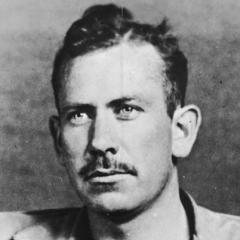
John Steinbeck was an American author renowned for his profound depiction of American society and the lives of farmers. His works often explore themes of poverty, social injustice, and human nature. Steinbeck was awarded the Nobel Prize in Literature in 1962 for his significant contribution to American literature. more
You May Also Like
“Conflict is not natural. It’s the result of the false agro-industrial system we’re addicted to.”
“If you do it right the first time you won't have to do. it again”
“Eat ten of your five a day and live twice as long”