“As Angela Davis has explained, if we accept uncritically the notion that prisons offer an answer, and that all we must do is improve our so-called justice systems, we evade the 'responsibility of seriously engaging with the problems of our society, especially those produced by racism and, increasingly, global capitalism.' Our ultimate goal-if we truly aim to overcome our nation's habit of constructing enormous systems of racial and social control-cannot simply be to reduce the number of people behind bars. We must strive to create a nation in which caging people en masse-digitally or literally-and stripping them of basic civil and human rights for the rest of their lives is not only unnecessary but unthinkable. . . . The important question, however, is whether we want to celebrate as 'progress' any development that might reflect the morphing or evolution of the system, rather than its demise. Human rights champion Bryan Stevenson has observed that 'slavery didn't end; it evolved.' Today, we can see, in real time, the system of mass incarceration evolving before our eyes, as enormous investments are made in immigrant detention centers and digital prisons, and as growing numbers of white people become collateral damage in a war that was declared with black people in mind.”
Quote by Michelle Alexander
Work
The New Jim Crow: Mass Incarceration in the Age of Colorblindness
This book critically examines the impact of mass incarceration on African Americans, arguing that it constitutes a new form of racial segregation and discrimination in the United States. more
Author
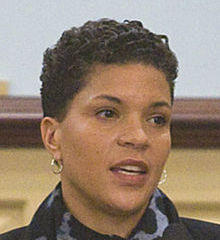
Michelle Alexander
Michelle Alexander is a distinguished professor of law at the University of California, Berkeley. Born on October 7, 1967, she is recognized for her expertise in criminal justice and civil rights. Alexander has authored numerous articles and books on the subject of mass incarceration in the United States and its effects on African American communities. more
You May Also Like
“We can choose to be the Incarceration Nation or, once again, become the land of the free.”
Source: A Vision of Hope: A Story of Redemption and Purpose
“Knowing the future is different from being told what I like.”
Source: The Time Traveler's Wife