Quotessence
Home / Quotes / Quote by James Henley Thornwell

Quote by James Henley Thornwell

“Saturday, May 22d.---It is now Saturday night, and I must prepare for the holy Sabbath. My Bible and Confession of Faith are my traveling companions, and precious friends have they been to me. I bless God for that glorious summary of Christian doctrine contained in our noble standards. It has cheered my soul in many a dark hour, and sustained me in many a desponding moment. I love to read it, and ponder carefully each proof text as I pass along.”

Quote by James Henley Thornwell

Work

Author

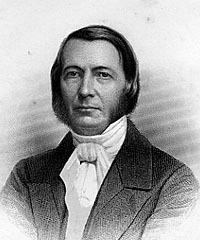
James Henley Thornwell

James Henley Thornwell was an American writer, theologian, and religious leader in South Carolina. Born on December 9, 1812, and died on August 1, 1862, he is known for his Southern stance during the Civil War and his leadership at the South Carolina Bible College, which later became the University of South Carolina. more

You May Also Like

“Most of Jesus’ life is told through the four Gospels of the New Testament, known as the Canonical gospels, written by Matthew, Mark, Luke and John. These are not biographies in the modern sense but accounts with allegorical intent. They are written to engender faith in Jesus as the Messiah and the incarnation of God, and not to provide factual data about Jesus’s life. This left the door of exaggeration open. And through that door all kinds of mystical non-sense crept in and made place right alongside the good philosophical teachings of Jesus.”

“If we ask a random orthodox religious person, what is the best religion, he or she would proudly claim his or her own religion to be the best. A Christian would say Christianity is the best, a Muslim would say Islam is the best, a Jewish would say Judaism is the best and a Hindu would say Hinduism is the best. It takes a lot of mental exercise to get rid of such biases.”

“Whether one likes it or not, every reader is at the same time an interpreter. That is, most of us assume as we read that we also understand what we read. We also tend to think that our understanding is the same thing as the Holy Spirit’s or human author’s intent. However, we invariably bring to the text all that we are, with all of our experiences, culture, and prior understandings of words and ideas. Sometimes what we bring to the text, unintentionally to be sure, leads us astray, or else causes us to read all kinds of foreign ideas into the text.”

“But while the story [of the Bible] is simple, it is also deep. There is always more to learn, to discover, and to enrich our understanding of who God is and what he is doing in the world. We study the Bible in depth in order to teach its story in all its richness. Greek is one tool of many that give us access to the richness of the Bible. Without it, our teaching may be sound, but it may also lack depth. In other words: Keep your Greek for the sake of others.”

“Teaching is no joke, sonny! ... Comforting truths, they call it! Truth is meant to save you first, and the comfort comes afterwards. Besides, you've no right to call that sort of thing comfort. Might as well talk about condolences! The Word of God is a red-hot iron. And you who preach it 'ud go picking it up with a pair of tongs, for fear of burning yourself, you daren't get hold of it with both hands. It's too funny! Why, the priest who descends from the pulpit of Truth, with a mouth like a hen's vent, a little hot but pleased with himself, he's not been preaching: at best he's been purring like a tabby-cat. Mind you that can happen to us all, we're all half asleep, it's the devil to wake us up, sometimes — the apostles slept all right at Gethsemane. Still, there's a difference... And mind you many a fellow who waves his arms and sweats like a furniture-remover isn't necessarily any more awakened than the rest. On the contrary. I simply mean that when the Lord has drawn from me some word for the good of souls, I know, because of the pain of it.”