Quotessence
Home / Quotes / Quote by Richard Matheson

Quote by Richard Matheson

“Last lines: Robert Neville looked out over the new people of the earth. He knew he did not belong to them; he knew that, like the vampires, he was anathema and black terror to be destroyed. And, abruptly, the concept came, amusing to him even in his pain. A coughing chuckle filled his throat. He turned and leaned against the wall while he swallowed the pills. Full circle, he thought while the final lethargy crept into his limbs. Full circle. A new terror born in death, a new superstition entering the unassailable fortress of forever. I am legend.”

Quote by Richard Matheson

Work

I Am Legend

In this classic science fiction tale, the protagonist, Robert Neville, is the last human in a world where vampires have taken over. Living in a fortified home, Neville conducts experiments to find a cure for the virus that has turned humans into vampires. The novel delves into themes of isolation, survival, and the human condition. more
Author

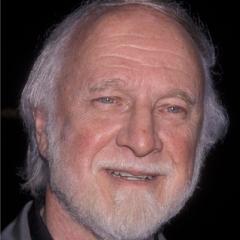
Richard Matheson
Richard Matheson

Richard Matheson was an American author renowned for his science fiction and horror novels. His works spanned a variety of literary genres, including novels, short stories, and television scripts. Matheson's writing career began in the mid-20th century, and he rose to prominence in the science fiction and horror literary communities. Many of his works have been adapted into films and television shows, such as 'The Night of the Living Dead' and 'The Shrinking Man'. His novel 'The Night of the Living Dead' was first published in 1962 and later adapted into the eponymous film, achieving great success. His short story collection 'The Shrinking Man' was also adapted into a film, further solidifying his reputation. more

You May Also Like

“As the last human lay dying in their shallow grave, they fashioned a crude grave marker from wood. It read: "Man - Terroriser of Fish and Great Destroyer of all he made, found or was gifted." They then covered themselves with earth and quietly passed away. Seeing this, God left the Universe and took the Sun with him.”

“Una vez, en la noche medieval, el vampiro había sido muy poderoso, y enormemente temido. Se lo había considerado anatema, y todavía lo era. La sociedad lo perseguía sin descanso. ¿Pero son sus necesidades más sorprendentes que las necesidades de otros animales y hombres? Realmente, mira en tu alma, ¿es el vampiro tan malo? Sólo bebe sangre. ¿Porqué entonces ese juicio malévolo, esa condenación insensat? ¿Porqué el vampiro no podía elegir su vivienda? ¿Porqué debía ocultarse? ¿Porqué exterminarlos? Ah, ya ves, has convertido al desamparado inocente en un animal perseguido. El vampiro carece de medios de subsistencia, no puede educarse. Se le niega el derecho al voto. No es raro que deba arrastrar una existencia noctura y pedatoria. Neville dejó escapar un gruñido. Claro, claro, pero no permitiría que mi hermana se casase con uno.”

“Matheson instituía assim uma espécie de distopia vampiresca — sua obra servindo, inclusive, como modelo para muitos cenários de “apocalipse zumbi” que surgiriam na segunda metade do século 20, como o clássico A Noite dos Mortos-vivos (1968) de George A. Romero —, fazendo uso desse modo narrativo que se apropria de tensões do presente para imaginar os mais variados cenários de desastre alternativos ou futuros, bem como da figura do vampiro como agente propagador de doenças, o veículo para o apocalipse.”

“Em Drácula, o vampiro, personificação da perversidade e do mal, era repelido pelo símbolo religioso em si, que se tornava uma arma que emanava poder; em ‘Salem, o símbolo somente tinha poder na medida em que a pessoa que o empunhasse houvesse nele depositado uma fé inabalável; já em Eu Sou a Lenda, por outro lado, não importava a fé de quem empunhava o símbolo, e sim, o entendimento do vampiro de seu lugar perante a ele. Entende-se, portanto — embora a narrativa não aprofunde o tema —, que cruzes ou hóstias não teriam qualquer tipo de efeito sobre vampiros que haviam sido ateus, por exemplo. A internalização do ódio parecia residir no âmago do processo.”

“Two weeks ago my mountain of mail delivered forth a pipsqueak mouse of a letter from a well-known publishing house that wanted to reprint my story “The Fog Horn” in a high school reader. In my story, I had described a lighthouse as hav­ing, late at night, an illumination coming from it that was a “God-Light.” Looking up at it from the view-point of any sea-creature one would have felt that one was in “the Presence.” The editors had deleted “God-Light” and “in the Presence.” Some five years back, the editors of yet another anthology for school readers put together a volume with some 400 (count ‘em) short stories in it. How do you cram 400 short stories by Twain, Irving, Poe, Maupassant and Bierce into one book? Simplicity itself. Skin, debone, demarrow, scarify, melt, render down and destroy. Every adjective that counted, every verb that moved, every metaphor that weighed more than a mosquito—out! Every simile that would have made a sub-moron’s mouth twitch—gone! Any aside that explained the two-bit philosophy of a first-rate writer—lost! Every story, slenderized, starved, bluepenciled, leeched and bled white, resembled every other story. Twain read like Poe read like Shakespeare read like Dostoevsky read like—in the finale—Edgar Guest. Every word of more than three syllables had been ra­zored. Every image that demanded so much as one instant’s attention—shot dead. Do you begin to get the damned and incredible picture? How did I react to all of the above? By “firing” the whole lot. By sending rejection slips to each and every one. By ticketing the assembly of idiots to the far reaches of hell.”

“The human psyche has two great sicknesses: the urge to carry vendetta across generations, and the tendency to fasten group labels on people rather than see them as individuals. Abrahamic religion mixes explosively with (and gives strong sanction to) both. Only the willfully blind could fail to implicate the divisive force of religion in most, if not all, of the violent enmities in the world today. Without a doubt it is the prime aggravator of the Middle East. Those of us who have for years politely concealed our contempt for the dangerous collective delusion of religion need to stand up and speak out. Things are different now. ‘All is changed, changed utterly.”