Quotessence
Home / Quotes / Quote by Tim Gunn

Quote by Tim Gunn

“All over America, you see women in yoga pants and men in sweatpants, even when they are not on their way to or from a yoga class or softball field. When I fly, I see so many sweat suits – even pajamas – on my fellow travelers that it’s as though the airplane were the sleeper car of a train bound for summer camp or a gym in the sky, not a public space for business people and vacationers.”

Quote by Tim Gunn

Work

Tim Gunn's Fashion Bible

Browse quotes and source details for this work. more

Author
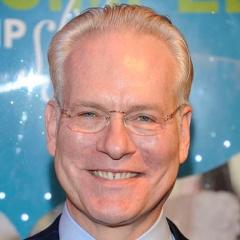
Tim Gunn
Tim Gunn

Tim Gunn, born on July 29, 1953, is a renowned fashion consultant. He has over 30 years of experience in the fashion industry and is well-known as a mentor on the reality TV show 'Project Runway'. His unique style and professional knowledge have won him the admiration of viewers. more

You May Also Like

“When you read the account of a murder - or, say, a fiction story based on murder - you usually begin with the murder itself. That's all wrong. The murder begins a long time beforehand. A murder is the culmination of a lot of different circumstances, all converging at a given moment at a given point. People are brought into it from different parts of the globe and for unforeseen reasons. [...] The murder itself is the end of the story. It's Zero Hour.” He paused. “It's Zero Hour now.”

“What was that all about?" Jay asked in loud whisper. She still felt like her head was reeling. She had no idea what she was going to tell to Grady when school was out. "I think Grady just asked me to Homecoming," she announced to Jay. He looked at her suspiciously. "The game?" Violet cocked her head to the side and gave him a look that told him to be serious. "No, I'm pretty sure he meant the dance," Violet clarified, exasperated by the obtuse question.”

“HISTORY AND THE TRIPLET OF OPACITY History is opaque. You see what comes out, not the script that produces events, the generator of history. There is a fundamental incompleteness in your grasp of such events, since you do not see what's inside the box, how the mechanisms work. What I call the generator of historical events is different from the events themselves, much as the minds of the gods cannot be read just by witnessing their deeds. You are very likely to be fooled about their intentions. This disconnect is similar to the difference between the food you see on the table at the restaurant and the process you can observe in the kitchen. (The last time I brunched at a certain Chinese restaurant on Canal Street in downtown Manhattan, I saw a rat coming out of the kitchen.) The human mind suffers from three ailments as it comes into contact with history, what I call the triplet of opacity. They are: a. the illusion of understanding, or how everyone thinks he knows what is going on in a world that is more complicated (or random) than they realize; b. the retrospective distortion, or how we can assess matters only after the fact, as if they were in a rearview mirror (history seems clearer and more organized in history books than in empirical reality); and c. the overvaluation of factual information and the handicap of authoritative and learned people, particularly when they create categories—when they "Platonify.”

“So when I presented to what was until then the most hostile crowd in the world, members of the American Statistical Association, a map of the four quadrants, and told them: your knowledge works beautifully in these three quadrants, but beware of the fourth one, as this is where the Black Swans breed, I received instant approval, support, offers of permanent friendship, refreshments (Diet Coke), invitations to come present at their sessions, even hugs.”

“I came to discuss Black Swans, and I intended to tell them that the only thing I know is that we know precious little about them, but that it was their property to sneak up on us, and that attempts at Platonifying them led to additional misunderstandings. Military people can understand such things, and the idea became recently prevalent in military circles with the expression unknown unknown (as opposed to the known unknown).”