“To speak conventionally - and I think it is easier for the general reader to see Zen thus presented - there are unknown recesses in our minds which lie beyond the threshold of the relatively constructed consciousness. To designate them as “sub-conciousness” or “supra-consciousness” is not correct. The word “beyond” is used simply because it is a most convenient term to indicate their whereabouts. But as a matter of fact there is no “beyond”, no “underneath”, no “upon” in our consciousness. The mind is one indivisible whole and cannot be torn in pieces. The so-called terra incognita is the concession of Zen to our ordinary way of talking, because whatever field of consciousness that is known to us is generally filled with conceptual riffraff, and to get rid of them, which is absolutely necessary for maturing Zen experience, the Zen psychologist sometimes points to the presence of some inaccessible region in our minds. Though in actuality there is no such region apart from our everyday consciousness, we talk of it as generally more easily comprehensible by us.”
Quote by D.T. Suzuki
Work
An Introduction to Zen Buddhism provides a comprehensive look at the history, teachings, and practices of Zen Buddhism. The text delves into the core concepts and techniques that define this path of enlightenment, including meditation, mindfulness, and the concept of Zen enlightenment. It is suitable for both beginners and those with some prior knowledge of Zen, aiming to offer a clear and accessible introduction to this rich and complex tradition. more
Author
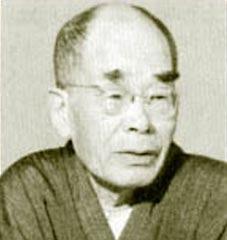
D.T. Suzuki, a renowned Japanese philosopher, Buddhist scholar, and translator, was born on October 18, 1870, and died on July 12, 1966. He is best known for his profound research into Zen Buddhism and his influential translations, which have greatly contributed to the Western understanding of Eastern philosophy and culture. more
You May Also Like
“Zen movement is a meditative practice.”