Quotessence
Home / Quotes / Quote by Peter Matthiessen

Quote by Peter Matthiessen

“I grow into these mountains like a moss. I am bewitched. The blinding snow peaks and the clarion air, the sound of earth and heaven in the silence, the requiem birds, the mythic beasts, the flags, great horns, and old carved stones, the silver ice in the black river, the Kang, the Crystal Mountain. Also, I love the common miracles-the murmur of my friends at evening, the clay fires of smudgy juniper, the coarse dull food, the hardship and simplicity, the contentment of doing one thing at a time… gradually my mind has cleared itself, and wind and sun pour through my head, as through a bell. Though we talk little here, I am never lonely; I am returned into myself. In another life-this isn’t what I know, but how I feel- these mountains were my home; there is a rising of forgotten knowledge, like a spring from hidden aquifers under the earth. To glimpse one’s own true nature is a kind of homegoing, to a place East of the Sun, West of the Moon- the homegoing that needs no home, like that waterfall on the supper Suli Gad that turns to mist before touching the earth and rises once again to the sky.”

Quote by Peter Matthiessen

Work

The Snow Leopard

The book combines adventure, natural history, and spiritual reflection as the author treks through remote mountainous regions, encountering diverse wildlife and local cultures. more

Author
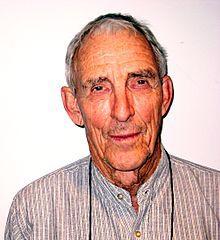
Peter Matthiessen
Peter Matthiessen

Peter Matthiessen was an American novelist and naturalist, renowned for his works that seamlessly integrate fiction and non-fiction. His writing frequently delved into environmental themes and the human connection with nature. Born on May 22, 1927, he passed away on April 5, 2014. more

You May Also Like

“Maybe there’s a heaven, like they say, a place where everything we’ve ever done is noted and recorded, weighed on big karma scales. Maybe not. Maybe this whole thing is just a giant experiment run by aliens who find out human hijinks amusing. Or maybe we’re an abandoned project started by a deity who checked out a long time ago, but we’re still hard-wired to believe, to try to make meaning out of the seemingly random. Maybe we’re all part of the same unconscious stew, dreaming the same dreams, hoping the same hopes, needing the same connection, trying to find it, missing, trying again—each of us playing our parts in the other’s plotlines, just one big ball of human yarn tangled up together. Maybe this is it.”

“The central feature of the practice of meditation and hard work known as Zen is that, as Matthiessen says, it “has no patience with mysticism, far less the occult.” Nor does it have any time with moralism, the prescriptions or distortions we would impose on the world, obscuring it from our view. It asks, it insists rather, that we take this moment for what it is, undistracted, and not cloud it with needless worries of what might have been or fantasies of what might come to be. It is, essentially, a training in the real…”the Universe itself is the scripture of Zen." Pico Iyer from introduction.”

“I sit in meditation…and soon all sounds, and all one sees and feels, take on imminence, an immanence, as if the Universe were coming to attention, a Universe of which one is the center, a Universe that is not the same yet not different from oneself: within man as within mountains there are many parts of hydrogen and oxygen, of calcium, phosphorus, potassium, and other elements. ‘You never enjoy the world aright, till the Sea itself flows in your veins, till you are clothed with the heavens, and crowned with the stars…’(Thomas Traherne, Centuries of Meditation) The secret of the mountains is that the mountains simply exist, as I do myself: the mountains exist simply, which I do not. The mountains have no ‘meaning,’ they are meaning; the mountains are. The sun is round. I ring with life, and the mountains ring, and when I can hear it, there is a ringing that we share.”

“It is as if I have entered what the Tibetans call the Bardo-literally, between-two-existences- a dreamlike hallucination that precedes reincarnation, not necessarily in human form…In case I should need them, instructions for passage through the Bardo are contained in the Tibetan book of the dead- a guide for the living since it teaches that a man’s last thoughts will determine the quality of his reincarnation.”

“Zen is a journey of exploration and a way of living that, in and of itself, does not belong to any one religion or tradition. It is about experiencing life in the here and now and about removing the dualistic distinctions between "I" and "you" between "subject" and "objective", between our spiritual and our ordinary, everyday activities.”