Quotessence
Home / Quotes / Quote by Richard Matheson

Quote by Richard Matheson

“He was getting disgusted at this increasing nostalgic preoccupation with the past. It was a weakness, he knew, a weakness he could scarcely afford if he intended to go on. And yet he kept discovering himself drifting into extensive meditation on aspects of the past. It was almost more than he could control, and it was making him furious with himself.”

Quote by Richard Matheson

Work

I Am Legend

In this classic science fiction tale, the protagonist, Robert Neville, is the last human in a world where vampires have taken over. Living in a fortified home, Neville conducts experiments to find a cure for the virus that has turned humans into vampires. The novel delves into themes of isolation, survival, and the human condition. more

Author

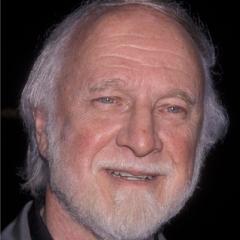
Richard Matheson
Richard Matheson

Richard Matheson was an American author renowned for his science fiction and horror novels. His works spanned a variety of literary genres, including novels, short stories, and television scripts. Matheson's writing career began in the mid-20th century, and he rose to prominence in the science fiction and horror literary communities. Many of his works have been adapted into films and television shows, such as 'The Night of the Living Dead' and 'The Shrinking Man'. His novel 'The Night of the Living Dead' was first published in 1962 and later adapted into the eponymous film, achieving great success. His short story collection 'The Shrinking Man' was also adapted into a film, further solidifying his reputation. more

You May Also Like

“But remember 2003, though, when girls wore those miniskirts that were like six floaty napkins stapled to a scrunchie, with perhaps an Edwardian waistcoat sewn of cobwebs as a top? Where at any moment a baby’s sneeze across campus might expose Kaylee’s entire bunghole and even the slouchy Western belt she wore over her three layers of different-colored camisoles couldn’t save her? In case you’ve repressed the memory, 2003 was the kind of year where Jessica Simpson might wear rubber flip-flops to the Golden Globes, and Nicole Richie was nearly elected president on a platform of “straight blonde hair on top, long curly dark brown extensions underneath, one feather.” The 2003 vibe—culturally, socially, politically, spiritually—was very “energy drink commercial directed by Mark McGrath, and not Mark McGrath in his prime, either.” Millions of Americans were forced to mourn Mr. Rogers while wearing a hot-pink corduroy train conductor’s hat. Never again! Bad Boys II is a 2003 movie.”

“Mostly I love Halloween because it is the orange-and-black beginning of a season that tumbles into Thanksgiving, which tumbles into Christmas. And Zombies just seem a little out of place in that. Thanksgiving should have nothing to do with armies of shuffling undead. Don’t get me started on Christmas. The only undead at Christmas should be Jacob Marley, wailing about greed. The iconic image of Halloween should be the pun’kin. The pun’kin, carved into faces that are scary only because we want them to be, winking from every porch. The pun’kin cast in plastic, swinging from the hands of knee-high princesses, leering back from department store shelves, until it gives way to tins of butter cookies. But I fear for the pun’kin. How long before before he is kicked down the street by zombie hordes, booted into obscurity? Young people tell me that no one—no one— wants to dress up like a pun’kin any more. All a pun’kin does they say is sit there, and glow. This may be true, all of it, but try to make a pie out of a zombie, and see where that gets you. Though I hear that, when it comes to pies, your canned zombie is the way to go.”

“Revolutionary theory also enshrined the living utopian hope that the State would wither away, and that the political sphere would negate itself as such, in the apotheosis of a finally transparent social realm. None of this has come to pass. The political sphere has disappeared, sure enough - but so far from doing so by means of a self-transcendence into the strictly social realm, it has carried that realm into oblivion with it. We are now in the transpolitical sphere; in other words, we have reached the zero point of politics, a stage which also implies the reproduction of politics, its endless simulation. For everything that has not successfully transcended itself can only fall prey to revivals without end. So politics will never finish disappearing - nor will it allow anything else to emerge in its place. A kind of hysteresis of the political reigns. Art has likewise failed to realize the utopian aesthetic of modern times, to transcend itself and become an ideal form of life. (In earlier times, of course, art had no need of self-transcendence, no need to become a totality, for such a totality already existed - in the shape of religion.) Instead of being subsumed in a transcendent ideality, art has been dissolved within a general aestheticization of everyday life, giving way to a pure circulation of images, a transaesthetics of banality. Indeed, art took this route even before capital, for if the decisive political event was the strategic crisis of 1929, whereby capital debouched into the era of mass trans politics, the crucial moment for art was undoubtedly that of Dada and Duchamp, that moment when art, by renouncing its own aesthetic rules of the game, debouched into the transaesthetic era of the banality of the image. Nor has the promised sexual utopia materialized. This was to have consisted in the self-negation of sex as a separate activity and its self-realization as total life. The partisans of sexual liberation continue to dream this dream of desire as a totality fulfilled within each of us, masculine and feminine at once, this dream of sexuality as an assumption of desire beyond the difference between the sexes. In point of fact sexual liberation has succeeded only in helping sexuality achieve autonomy as an undifferentiated circulation of the signs of sex. Although we are certainly in transition towards a transsexual state of affairs, this has nothing to do with a revolution of life through sex - and everything to do with a confusion and promiscuity that open the door to virtual indifference (in all senses of the word) in the sexual realm.”