Quotessence
Home / Quotes / Quote by Thomas Hardy

Quote by Thomas Hardy

“Life with a man is more businesslike after it, and money matters work better. And then, you see, if you have rows, and he turns you out of doors, you can get the law to protect you, which you can't otherwise, unless he half-runs you through with a knife, or cracks your noddle with a poker. And if he bolts away from you--I say it friendly, as woman to woman, for there's never any knowing what a man med do-- you'll have the sticks o' furniture, and won't be looked upon as a thief.”

Quote by Thomas Hardy

Work

Jude the Obscure

Thomas Hardy's novel follows the life of Jude Fawley, a man of humble origins who aspires to a higher education and a better life, only to face numerous challenges and heartbreaks in his pursuit of love and social mobility. more

Author

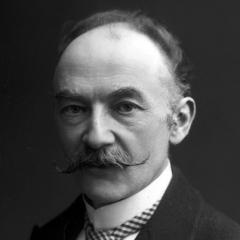
Thomas Hardy
Thomas Hardy

Thomas Hardy, a British novelist born on June 2, 1840, and died on January 11, 1928, is renowned for his novels that depict rural life, reflecting the social changes in 19th-century England. His works often carry a sense of pessimism, depicting the fates of characters with sympathy. more

You May Also Like

“After she married the Duke of York, she immediately transformed his life, bringing him love, understanding, sympathy and support for which he had always craved. She inspired him, she calmed him and she enabled him for the first time in his life to believe in himself. Her sense of humor awoke his own, her natural gaiety lightened him. Their marriage was a rare union in which each complemented and enhanced the other.”

“[...] Но вот что слишком немногими испытано, что очаровательность, которую всему дает любовь, вовсе не должна, по-настоящему, быть мимолетным явлением в жизни человека, что этот яркий свет жизни не должен озарять только эпоху искания, стремления, назовем хотя так: ухаживания, или сватания, нет, что эта эпоха по-настоящему должна быть только зарею, милою, прекрасною, но предшественницею дня, в котором несравненно больше и света и теплоты, чем в его предшественнице, свет и теплота которого долго, очень долго растут, все растут, и особенно теплота очень долго растет, далеко за полдень все еще растет. Прежде было не так: когда соединялись любящие, быстро исчезала поэзия любви. Теперь у тех людей, которые называются нынешними людьми, вовсе не так. Они, когда соединяет их любовь, чем дольше живут вместе, тем больше и больше озаряются и согреваются ее поэзиею, до той самой поры, позднего вечера, когда заботы о вырастающих детях будут уже слишком сильно поглощать их мысли. Тогда забота более сладкая, чем личное наслаждение, становится выше его, но до той поры оно все растет. То, что прежние люди знали только на мимолетные месяцы, нынешние люди сохраняют в себе на долгие, долгие годы. Отчего это так? А это уж секрет; я вам, пожалуй, выдам его. Хороший секрет, славно им пользоваться, и не мудрено, только надобно иметь для этого чистое сердце и честную душу, да нынешнее понятие о правах человека, уважение к свободе того, с кем живешь. Только, - больше и секрета нет никакого. Смотри на жену, как смотрел на невесту, знай, что она каждую минуту имеет право сказать: "я недовольна тобою, прочь от меня"; смотри на нее так, и она через девять лет после твоей свадьбы будет внушать тебе такое же поэтическое чувство, как невеста, нет, более поэтическое, более идеальное в хорошем смысле слова. Признавай ее свободу так же открыто и формально, и без всяких оговорок, как признаешь свободу твоих друзей чувствовать или не чувствовать дружбу к тебе, и тогда, через десять лет, через двадцать лет после свадьбы, ты будешь ей так же мил, как был женихом.”

“A month ago, Gavin had given his employer four weeks' notice. "I'll get a job around here," he'd told her. "Something low-stress, part-time, maybe. We're not paying rent, and Dad's left us plenty. You should quit, too." A year earlier this news would have filled her with delicious, full fat, chocolate-coated joy. But now, after a grueling routine of shitty work, shitty- weird home life in a house where the shadow of a dead boy walked more solidly than the grownups, shitty headaches, shitty worry about a husband who couldn't keep his dick out of other women, the golden offer just weirded Laine out. She didn't trust it.”

“By journey's end the brides were much better acquainted with their grooms and more or less pleased with the matches. Sybil Bingham wrote in her diary, thanking God for answering her prayer for filling "the void" with a husband like Hiram, a "treasure rich and undeserved." Having read his insufferable memoir, "A Residence of Twenty-one Years in the Sandwich Islands", all I can say is: I'm happy for her?”