Quotessence
Home / Quotes / Quote by George Eliot

Quote by George Eliot

“There is no more to be said. Things cannot be altered, and who cares? It makes no difference to any one else what we do. We must try not to care ourselves. We must not give way. I dread giving way. Help me to he quiet.”

Quote by George Eliot

Work

Daniel Deronda

Daniel Deronda is a complex narrative that intertwines the lives of its characters with the broader social and political context of the time. The story follows Daniel, a young man raised by a Jewish family, as he navigates his identity and relationships amidst the backdrop of the British Empire's expansion and the rise of Zionism. more
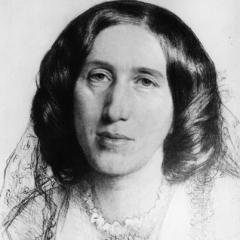
Author

George Eliot
George Eliot

George Eliot, born Mary Ann Evans, was a renowned 19th-century British novelist. Her works are known for their profound psychological insights and critical exploration of social issues. With her unique narrative techniques and rich emotional expression, she has had a profound impact on literature. more

You May Also Like

“It would take me a few weeks outside that cycle of conflicts to realize that I am destined to be centerless, one lone flaming planet outside of a livable orbit. Opportunistically, I should like to present my definition of destiny: It is what I should have avoided but I dared not. It is what I wanted to embrace even when I saw in it my death. It is the seductive angels of fire and the celebrating djinns. It is what I must break ties with and commit apostasy.”

“You’ve got a choice: ...you can just give in. You can give your jailers what they want. Switch off another light and in the ocean of darkness bow your head and cry. You can despair for your kids, and they can despair for you. But what does this choice give you? Have you any great new happiness now? What does your unhappiness give to your children? Why did you make this choice? Why did you walk into the trap of captivity?”

“We know Job's faith survived because his reaction to his devastating loss was to worship God: "Then Job arose and tore his robe and shaved his head, and he fell to the ground and worshiped. He said, 'Naked I came from my mother's womb, and naked I shall return there. The Lord gave and the Lord has taken away. Blessed be the name of the Lord'" (Job 1:20-21). Let me encourage you and your messed up man, should he be willing, to begin to worship God from your place of brokenness. Tina shares a dramatic story from her work as a music therapist for hospice. One day, as she prepared to leave the hospice floor at the hospital, a nurse called her back to work with a patient in respiratory arrest. Music therapists use music to match the beat of a patient's heart rate, and as the therapist slows down the beat of music, most of the time the heart rate follows, as well as the breathing. At the start of the process, the patient's wife shouted, "Sing 'Amazing Grace'?" Deciding to minister rather than work, Tina sang "Amazing Grace." The patient's distress was overwhelming. He could hardly take in air, and his chest heaved while his wife wept. Right in the middle of "Amazing Grace," The wife once more blurted out, "Sing 'Jesus Loves Me'!" Tina, switched gears and sang, "Yes, Jesus loves me." Tears streamed down the man's cheeks as he sang with her, "Yes, Jesus loves me." His words were broken and he could hardly say them, but in that moment, he worshiped the God who was about to take him home. Whatever you're facing . . . worship.”

“There is no single god. There can never be a single god. For there to be one face, there must be another. The Nah’ruk did not see it in such terms, of course. They spoke of forces in opposition, of the necessity of tension. All that binds must be bound to two foci, at the minimum. Even should a god exist alone, isolated in its perfection, it will come to comprehend the need for a force outside itself, beyond its omniscience. If all remains within, Destriant—exclusively within, that is—then there is no reason for anything to exist, no reason for creation itself. If all is ordered, untouched by chaos, then the universe that was, is and will ever be, is without meaning. Without value. The god would quickly comprehend, then, that its own existence is also without meaning, and so it would cease. It would succumb to the logic of despair.”

“Snowdrops Do you know what I was, how I lived? You know what despair is; then winter should have meaning for you. I did not expect to survive, earth suppressing me. I didn’t expect to waken again, to feel in damp earth my body able to respond again, remembering after so long how to open again in the cold light of earliest spring— afraid, yes, but among you again crying yes risk joy in the raw wind of the new world.”

“If something negative comes to the surface, such as your despair and anger, or the despair and anger of your spouse, you need the energy of mindfulness to embrace it. Breathing in, I know that anger is there in me. Breathing out, I care for my anger. This is like a mother hearing her baby cry out. She is in the kitchen, and she hears her baby wailing. She puts down whatever she has in her hands, goes into the baby's room, and picks it up in her arms. You can do exactly the same thing--embrace the pain that is coming to the surface. Breathing in, I know that you are there, my dear anger, my dear despair. I am there for you; I will take care of you.”