“It is commonly said that a good horse should have fifteen properties and conditions, namely: three of a man, three of a woman, three of a fox, three of a hare and three of an ass: like a man, he should be bold, proud and hardy; like a woman, he should be fair breasted, fair of hair and easy to lie upon; like a fox, he should have a fair tail, short ears and go with a good trot; like a hare, he should have a great eye, a dry head and run well; and like an ass, he should have a big chin, a flat leg and a good hoof.”
Quote by Ian Mortimer
Work
The Time Traveller's Guide to Medieval England: A Handbook for Visitors to the Fourteenth Century
Browse quotes and source details for this work. more
Author
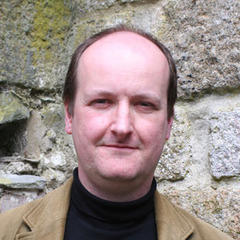
Ian Mortimer
Ian Mortimer is a British historian and writer renowned for his research on medieval England. Born on September 22, 1967, he has been a professor of history since 1996. Mortimer's work focuses on the political, social, and cultural life of medieval England, with his book 'The Time Traveler's Guide to Medieval England' gaining widespread popularity for offering readers a unique perspective on the daily life of the time. more
You May Also Like
Source: The Clearing
“It is the doubt of success that insures the fulfillment of that doubt.”
Source: The Devil's Doctor: Paracelsus and the World of Renaissance Magic and Science
Source: A Distant Mirror: The Calamitous 14th Century
Source: Problems of Humanity
Source: Speaking Up for Animals: An Anthology of Women's Voices
“But artists didn't need to achieve "firsts", and Hughes wanted to be an artist.”
Source: Her Husband: Ted Hughes and Sylvia Plath - A Marriage