Quotessence
Home / Quotes / Quote by Jean Baudrillard

Quote by Jean Baudrillard

“When truth and reality were made to take lie-detector tests, they themselves confessed to not believing in truth and reality. We are all agnostics. There were those who believed in God and those who did not. There are those who believe in reality and those who do not. And then there are the reality agnostics who, though not rejecting it in an absolute sense, reject belief in it: 'Reality (like God in the past) may perhaps exist, but I don't believe in it.' There is nothing contradictory or absurd in this. It is the enlightened refusal to let oneself be caught in the trap of a reality that is fetishized in its principle, a reality that is itself caught in the trap of the signs of reality. Is there such a thing as a naked, original reality, anterior to the signs in which it is made manifest? Who knows? The self-evidence of reality has a shadow of retrospective doubt hovering over it. However this may be, the agnostic is not concerned with this hinterworld or this original reality; he confines himself to reality as an unverifiable hypothesis, to signs as signs, behind which might also be hidden the absence of reality. (Their profusion in fact ends up voiding them of their credibility.)”

Quote by Jean Baudrillard

Work

The Intelligence of Evil or the Lucidity Pact

Browse quotes and source details for this work. more

Author
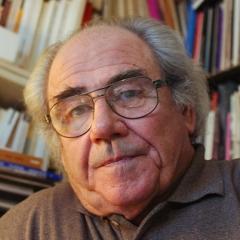
Jean Baudrillard
Jean Baudrillard

Jean Baudrillard was a French philosopher known for his critical studies on consumerism, media, and semiotics. His theories have had a profound impact on postmodernism and cultural studies. more

You May Also Like

“Art has always denied itself. But once it did so through excess, thrilling to the play of its disappearance. Today it denies itself by default - worse, it denies its own death. It immerses itself in reality, instead of being the agent of the symbolic murder of that same reality, instead of being the magical operator of its disappearance. And the paradox is that the closer it gets to this phenomenal confusion, this nullity as art, the greater credit and value it is accorded, to the extent that, to paraphrase Canetti, we have reached a point where nothing is beautiful or ugly any more; we passed that point without realizing it and, since we cannot get back to that blind spot, we can only persevere in the current destruction of art.”

“The virtuality of war is not, then, a metaphor. It is the literal passage from reality into fiction, or rather the immediate metamorphosis of the real into fiction. The real is now merely the asymptotic horizon of the Virtual. And it isn't just the reality of the real that's at issue in all this, but the reality of cinema. It's a little like Disneyland: the theme parks are now merely an alibi - masking the fact that the whole context of life has been disneyfied. It's the same with the cinema: the films produced today are merely the visible allegory of the cinematic form that has taken over everything - social and political life, the landscape, war, etc. - the form of life totally scripted for the screen. This is no doubt why cinema is disappearing: because it has passed into reality. Reality is disappearing at the hands of the cinema and cinema is disappearing at the hands of reality. A lethal transfusion in which each loses its specificity. If we view history as a film - which it has become in spite of us - then the truth of information consists in the postsynchronization, dubbing and sub-titling of the film of history.”

“As no man of large experience of humanity, however quietly carried it may be, can fail to be invested with an interest peculiar to the possession of such knowledge, Physician was an attractive man. Even the daintier gentlemen and ladies who had no idea of his secret, and who would have been startled out of more wits than they had, by the monstrous impropriety of his proposing to them 'Come and see what I see!' confessed his attraction. Where he was, something real was. And half a grain of reality, like the smallest portion of some other scarce natural productions, will flavour an enormous quantity of diluent.”

“The greatest lie of all is that we live in a strictly empirical world. We actually live in an analytic, mathematical world of reason and logic, and its flip side is the empirical world of phenomena. Your reason isn’t empty and futile, dealing only with ideals and nothing real. Your reason, just like your senses, feelings and intuitions, directly encounters reality, but noumenally rather than phenomenally, rationally rather than irrationally.”

“Contrary to what a narrowly positivist conception of human sciences would like, these are not only about the real world, but also about two other dimensions, just as important: the imaginary dimension, which governs representations and fictions; and the symbolic dimension, which governs meanings and interpretations, more or less conscious. These three dimensions of reality — the reality of lived situations, the imagination as conveyed by discursive or iconic forms, the symbolism of productions of meaning — cannot be reduced to each other, because they possess their own necessity and coherence.”