“[T]he righteousness wherein we must be found, if we will be justified, is not our own: therefore we cannot be justified by any inherent quality. Christ hath merited righteousness for as many as are found in him. In him God findeth us, if we be faithful, for by faith we are incorporated into him. Then, although in ourselves we be altogether sinful and unrighteous, yet even the man who in himself is impious, full of iniquity, full of sin, him being found in Christ through faith, and having his sin in hatred through repentance, him God beholdeth with a gracious eye, putteth away his sin by not imputing it, taketh quite away the punishment due thereunto, by pardoning it, and accepteth him in Jesus Christ as perfectly righteous, as if he had fulfilled all that is commanded him in the law: shall I say more perfectly righteous than if himself had fulfilled the whole law? I must take heed what I say; but the Apostle saith, "God made him who knew no sin to be sin for us, that we might be made the righteousness of God in him. [2 Cor 5:21] Such we are in the sight of God the Father as is the very Son of God himself. Let it be counted folly, or phrensy, or fury, or whatsoever. It is our wisdom and our comfort; we care for no knowledge in the world but this: that man hath sinned and God hath suffered; that God hath made himself the sin of men, and that men are made the righteousness of God. (A Learned Discourse on Justification, p. 6)”
Quote by Richard Hooker
Author
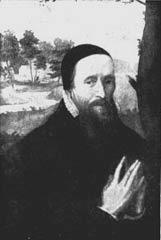
Richard Hooker (c. 1554 – 3 November 1600) was an influential English theologian and a key figure in the development of Anglicanism. He is best known for his work 'Of the Laws of Ecclesiastical Polity,' which provided a systematic defense of the Church of England's polity, liturgy, and doctrine. Hooker's thought integrated medieval scholasticism, Renaissance humanism, and Reformation principles, emphasizing the balance of reason, tradition, and Scripture. His writings shaped the Anglican identity and influenced later political philosophy. Hooker studied at Oxford University and served as a priest and professor. He died in 1600, but his legacy endures in theological and philosophical studies. more
You May Also Like
“Trust yourself to understand what is being said. If you cannot, it is not you – it is them.”