Quotessence
Home / Quotes / Quote by Stephen Fry

Quote by Stephen Fry

“It's now very common to hear people say, 'I'm rather offended by that.' As if that gives them certain rights. It's actually nothing more... than a whine. 'I find that offensive.' It has no meaning; it has no purpose; it has no reason to be respected as a phrase. 'I am offended by that.' Well, so fucking what." [I saw hate in a graveyard -- Stephen Fry, The Guardian, 5 June 2005]”

Quote by Stephen Fry

Author
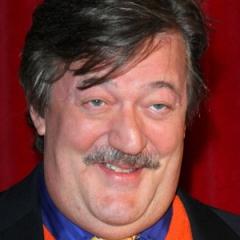
Stephen Fry
Stephen Fry

Stephen Fry is a British comedian, writer, actor, and broadcaster, known for his unique sense of humor and intelligence. He is one of the iconic figures in the British comedy scene. Born on August 24, 1957, Fry has been active in television and radio since the 1980s, gaining widespread popularity for his roles in comedy shows like 'Blackadder' and 'Jeeves and Wooster'. He has also appeared in numerous television series, films, and stage plays. more

You May Also Like

“This is life, Tom,' his father had explained, standing in the doorway to their funeral home's main chapel before approaching her [Tom's mother]. 'And this is death.' Jack Klay switched off the light and darkness filled the room. 'Death is always present, but death is afraid of the light.' His father switched the light back on. 'Your mother was a light.' He squeezed Klay's hand. 'You are a light, Tom. But when a light is switched off, the world is back to its natural state. Do you understand?' Klay said he did. He took from the lesson a message his father had not intended: if the fundamental state of the world is darkness, it is foolish to grieve. He deid not want to be foolish. His mother wouldn't like that. And so to honor her he swore he would not cry at her funeral. He would not mourn her, or anyone.... Without realizing it, his definition of darkness expanded over the years so that it wasn't just grief over a lost life he silenced. He found ways to switch off his feelings for all sorts of things that might end: friendships, loves, dreams. Over time, his idea of what constituted an end expanded, too. He learned to protect himself not just from the prospect of grieving, but from any loss, any pain. He began pulling the plug on possibilities earlier and earlier, shutting himself off from everything he might care deeply about before it had a chance to hurt him by dying in front of him--the way his mother had.”

“For some time the augurs had been sure that the carpet's harmonious pattern was of divine origin. The oracle was interpreted in this sense, arousing no controversy. But you could, similarly, come to the opposite conclusion: that the true map of the uni-verse is the city of Eudoxia, just as it is, a stain that spreads out shapelessly, with crooked streets, houses that crumble one upon the other amid clouds of dust, fires, screams in the darkness.”

“Nebraska dark didn't close in, it stretched out...Broad stretching sky covering everything, everything, forever. He could see what was ahead in the beam of his headlights, but beyond that was more of the same. Of the same. Of the same. No tight corners or dead-ends. No earth-trapping suffocation. The opposite. There was nothing, forever, nothing, and he could breathe in and breathe in and breathe in and breathe in until his lungs exploded and there would still be more air, more wind, clawing its way down his useless throat. That was Nebraska.”