Quotessence
Home / Quotes / Quote by Kenneth Grahame

Quote by Kenneth Grahame

“The Mole had been working very hard all the morning, spring-cleaning his little home. First with brooms, then with dusters; then on ladders and steps and chairs, with a brush and a pail of whitewash; till he had dust in his throat and eyes, and splashes of whitewash all over his black fur, and an aching back and weary arms.”

Quote by Kenneth Grahame

Work

The wind in the willows

This enduring children's novel, originally published in 1908, is renowned for its charming narrative and vivid portrayal of the natural world. The story revolves around Ratty, Mole, Badger, and Toad, who embark on various escapades and face challenges that test their camaraderie and character. more

Author
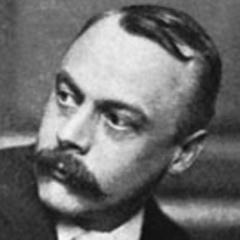
Kenneth Grahame
Kenneth Grahame

Kenneth Grahame, a British film writer, was born on March 8, 1859, and passed away on July 6, 1932. He is renowned for his unique insights and contributions to the art of film. more

You May Also Like

“The cactus thrives in the desert while the fern thrives in the wetland. The fool will try to plant them in the same flowerbox. The florist will sigh and add a wall divider and proper soil to both sides. The grandparent will move the flowerbox halfway out of the sun. The child will turn it around properly so that the fern is in the shade, and not the cactus. The moral of the story? Kids are smart.”

“Hardly had the light been extinguished, when a peculiar trembling began to affect the netting under which the three children lay. It consisted of a multitude of dull scratches which produced a metallic sound, as if claws and teeth were gnawing at the copper wire. This was accompanied by all sorts of little piercing cries. The little five-year-old boy, on hearing this hubbub overhead, and chilled with terror, jogged his brother's elbow; but the elder brother had already shut his peepers, as Gavroche had ordered. Then the little one, who could no longer control his terror, questioned Gavroche, but in a very low tone, and with bated breath:-- "Sir?" "Hey?" said Gavroche, who had just closed his eyes. "What is that?" "It's the rats," replied Gavroche. And he laid his head down on the mat again. The rats, in fact, who swarmed by thousands in the carcass of the elephant, and who were the living black spots which we have already mentioned, had been held in awe by the flame of the candle, so long as it had been lighted; but as soon as the cavern, which was the same as their city, had returned to darkness, scenting what the good story-teller Perrault calls "fresh meat," they had hurled themselves in throngs on Gavroche's tent, had climbed to the top of it, and had begun to bite the meshes as though seeking to pierce this new-fangled trap. Still the little one could not sleep. "Sir?" he began again. "Hey?" said Gavroche. "What are rats?" "They are mice." This explanation reassured the child a little. He had seen white mice in the course of his life, and he was not afraid of them. Nevertheless, he lifted up his voice once more. "Sir?" "Hey?" said Gavroche again. "Why don't you have a cat?" "I did have one," replied Gavroche, "I brought one here, but they ate her." This second explanation undid the work of the first, and the little fellow began to tremble again. The dialogue between him and Gavroche began again for the fourth time:-- "Monsieur?" "Hey?" "Who was it that was eaten?" "The cat." "And who ate the cat?" "The rats." "The mice?" "Yes, the rats." The child, in consternation, dismayed at the thought of mice which ate cats, pursued:-- "Sir, would those mice eat us?" "Wouldn't they just!" ejaculated Gavroche. The child's terror had reached its climax. But Gavroche added:-- "Don't be afraid. They can't get in. And besides, I'm here! Here, catch hold of my hand. Hold your tongue and shut your peepers!”