Quotessence
Home / Quotes / Quote by Steven Pinker

Quote by Steven Pinker

Work

The Stuff of Thought: Language as a Window into Human Nature

This book delves into the intricate relationship between language and the human mind, examining how language shapes our perceptions, beliefs, and social interactions. It investigates the evolution of language and its role in human culture, offering insights into the nature of human thought and consciousness. more

Author
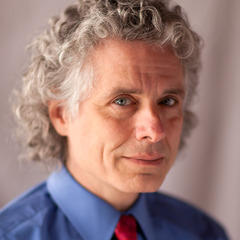
Steven Pinker
Steven Pinker

Steven Pinker is a renowned cognitive psychologist, linguist, and author. His research focuses on language, cognition, and human behavior, particularly the relationship between language and thought. Pinker is known for his in-depth research on the evolution of language and his contributions to the field of cognitive science. more

You May Also Like

“Public housing must not always represent the barest minimum of design consideration. Ask where the architect, contractor, administrator and legislator live? It will not be in public housing. Ask them if they would want to live in the complex they just created? The truthful answer will be “no way”. Until what is built is desirable and available to everyone, the future of of public housing will remain a marginal investment at best and an environmental crime at worst.”

“Miserabilism leads to a mixture of indifference towards the past and hatred of it. This hatred is visible in the architecture and urban planning of Europe since the war. [...] This mania for destruction, often carried out in lesser degrees by the strategic placement of a terrible building that the eye cannot escape (the Tour Montparnasse in Paris is a particularly fine example of the genre), is a symptom of an impotent rage that Europe has been left behind, is not longer in the vanguard of anything. It is also a kind of magical thinking: that by adopting the externals of modernity somehow modernity itself will be achieved and mastered.”

“When we aren’t aiming to be either precise or conclusive, it can be easy to agree on what a beautiful man-made place might look like. Attempts to name the world’s most attractive cities tend to settle on some familiar locations: Edinburgh, Paris, Rome, San Francisco. A case will occasionally be made for Siena or Sydney. Someone may bring up St Petersburg or Salamanca. Further evidence of our congruent tastes can be found in the patterns of our holiday migrations. Few people opt to spend the summer in Milton Keynes or Frankfurt. Nevertheless, our intuitions about attractive architecture have always proved of negligible use in generating satisfactory laws of beauty. We might expect that it would, by now, have grown as easy to reproduce a city with the appeal of Bath as it is to manufacture consistent quantities of blueberry jam. If humans were at some point adept at creating a masterwork of urban design, it should have come within the grasp of all succeeding generations to contrive an equally successful environment at will. There ought to be no need to pay homage to a city as to a rare creature; its virtues should be readily fitted to the development of any new piece of meadow or scrubland. There should be no need to focus our energies on preservation and restoration, disciplines which thrive on our fears of our own ineptitude. We should not have to feel alarmed by the waters that lap threateningly against Venice’s shoreline. We should have the confidence to surrender the aristocratic palaces to the sea, knowing that we could at any point create new edifices that would rival the old stones in beauty.”

“There are three key attributes that make people happy in their communities and cause them to develop a solid emotional attachment to the place they live in. The first is the physical beauty and the level of maintenance of the place itself - great open spaces and parks, historic buildings, and an attention to community aesthetics. The second is the ease with which people can meet others, make friends, and plug into social networks. The third piece of the happiness puzzle is the level of diversity, open-mindedness, and acceptance: Is there some equality of opportunity for all? Can anyone - everyone - contribute to and take pleasure from the community?”

“Infrastructure is always hugely expensive, and there's no clear way to measure the overall future return on investment, whether it's in the form of innovation, development, or new communities or jobs. Infrastructure provides a skeleton on which to grow a new economic model. The infrastructure investments we make now will determine the kind of economy we have in the future.”