Quotessence
Home / Quotes / Quote by Mary Wollstonecraft

Quote by Mary Wollstonecraft

Work

A Vindication of the Rights of Woman

Written by Mary Wollstonecraft, this book is a passionate plea for the education and rights of women, advocating for their equality in society and challenging the traditional roles assigned to them. more

Author
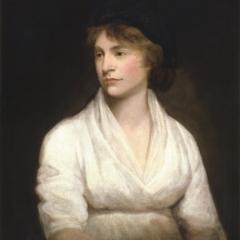
Mary Wollstonecraft
Mary Wollstonecraft

Mary Wollstonecraft, born on April 27, 1759, and died on September 10, 1797, was an influential English writer, philosopher, and feminist. She is best known for her work 'A Vindication of the Rights of Woman', which challenged the gender roles and social structures of her time. more

You May Also Like

“Being poor is not simply a matter of lacking opportunities to convert one's labor into a wage--or a living wage, for that matter--but rather of becoming indebted and, through the commodification of these debts, paying an ever-higher price for being poor.”

“Tilly would need a new environment, and good people around her. She had nowhere to go really. They’d seen enough addiction to know coming back to the same didn’t work anyway. But it would be good for her to get back into school somehow, especially since she’d been doing her last years of schooling and was doing alright from all accounts. “She’s a state ward. You could be her guardian? If she agrees? If we can get her at a boarding school or hostel or something? Then you’d only need to have her here in the holidays, maybe?” She might get a residential place at one of the boarding schools. Something. If she could rest, if she recovered, if she wanted.”

“In the 1960's, Labour had gained some power, or at least respectability. Spokesmen for the working class - but of course not necessarily coming from that class or belonging there except through ideology - were upset by the exposed inequalities and abuses disguised as treatment. It did not exactly strengthen the credibility of these measures that most receivers of this type of treatment for crime turned out to belong to just those classes supposed to be in political power.”

“Immobility results when people end up trapped by the social circumstances into which they are born: the networks in which they are embedded fail to provide them with the information and opportunities that they need to succeed.”

“In these pages, we have made propositions to meet those challenges: a sharply progressive wealth tax to curb the forms of rent extraction associated with extreme and entrenched wealth, an effective taxation of globe-straddling companies to reconcile globalization with tax justice, a national income tax to fund the modern social state and alleviate the crushing cost of health care.”

“Racial segregation remains a fundamental feature of the U.S. social landscape, leaving many African-Americans with the belief that "the more things change, the more they stay the same." Overlaying these persisting inequalities is a rhetoric of color blindness designed to render these social inequalities invisible. In a context where many believe that to talk of race fosters racism, equality allegedly lies in treating everyone the same. Yet as Kimberle Crenshaw (1997) points out, "it is fairly obvious that treating different things the same can generate as much inequality as treating the same things differently.”