Quotessence
Home / Quotes / Quote by Stephen King

Quote by Stephen King

Work

11/22/63

In this gripping narrative, the protagonist embarks on a mission to prevent the assassination of President John F. Kennedy. The story delves into the psychological and moral implications of altering the past, while offering a richly detailed portrayal of 1950s America. more

Author

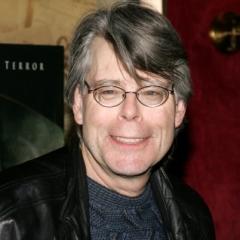
Stephen King
Stephen King

Stephen King, born on September 21, 1947, is a renowned American author. His works primarily focus on horror, fantasy, and science fiction, and have won him a wide audience. King has received numerous literary awards in the United States, including the Edgar Allan Poe Award and the World Fantasy Award. more

You May Also Like

“A phobia is an excessive or unreasonable fear of an object, situation or place. Phobias are quite common and often take root in childhood for no apparent reason. Other times they spring from traumatic events or develop from an attempt to make sense of unexpected and intense feelings of anxiety or panic. Simple phobias are fears of specific things such as insects, infections, or even flying. Agoraphobia is a fear of being in places where one feels trapped or unable to get help, such as in crowds, on a bus or in a car, or standing in a line. It is basically an anxiety that ignites from being in places or situations from which escape might be difficult (or embarrassing). A social phobia is a marked fear of social or performance situations. When the phobic person actually encounters, or even anticipates, being in the presence of the feared object or situation, immediate anxiety can be triggered. The physical symptoms of anxiety may include shortness of breath, sweating, a racing heart, chest or abdominal discomfort, trembling, and similar reactions. The emotional component involves an intense fear and may include feelings of losing control, embarrassing oneself, or passing out. Most people who experience phobias try to escape or avoid the feared situation wherever possible. This may be fairly easy if the feared object is rarely encountered (such as snakes) and avoidance will not greatly restrict the person’s life. At other times, avoiding the feared situation (in the case of agoraphobia, social phobia) is not easily done. After all, we live in a world filled with people and places. Having a fear of such things can limit anyone’s life significantly, and trying to escape or avoid a feared object or situation because of feelings of fear about that object or situation can escalate and make the feelings of dread and terror even more pronounced. In some situations of phobias, the person may have specific thoughts that contribute some threat to the feared situation. This is particularly true for social phobia, in which there is often a fear of being negatively evaluated by others, and for agoraphobia, in which there may be a fear of passing out or dying with no one around to help, and of having a panic attack where one fears making a fool of oneself in the presence of other people. Upon recognizing their problem for what it is, men should take heart in knowing that eighty percent of people who seek help can experience improvement of symptoms or, in male-speak, the illness can be “fixed.”

“My family and I really enjoyed this book. We loved the characters and the illustrations in the book. It gives great insight to what those first days of school can be like. It's just a very fun and entertaining book to read. I recommend this book to all families it will not disappoint.”

“During the rainy seasons, life sprang up all over the place, and in the ponds and rivers life was abundant. Hoppy was born on a day in May in what was considered to be spring rain. Early in his froghood, Hoppy's identity was like all others, and what he wanted most was to have his own identity.”

“Once the individual has learned to dissociate in the context of trauma, he or she may subsequently transfer this response to other situations and it may be repeated thereafter arbitrarily in a wide variety of circumstances. The dissociation therefore “destabilizes adaptation and becomes pathological.”[6] It is important for the psychiatrist to accurately diagnose DDs and also to place the symptoms in perspective with regard to trauma history.”

“My initial response on being told I suffered Dissociative Identity Disorder all those years earlier had been denial. I'd denied it to Rob Hale, I'd denied it to Valerie Sinason, to Evelyn Laine and John Morton. You could have lined up everyone from Lady Gaga to the Queen of Sheba and I'd have denied it to them as well. There was absolutely no way I shared my body with other personalities.”

“NASA are idiots. They want to send canned primates to Mars!" Manfred swallows a mouthful of beer, aggressively plonks his glass on the table: "Mars is just dumb mass at the bottom of a gravity well; there isn't even a biosphere there. They should be working on uploading and solving the nanoassembly conformational problem instead. Then we could turn all the available dumb matter into computronium and use it for processing our thoughts. Long-term, it's the only way to go. The solar system is a dead loss right now – dumb all over! Just measure the MIPS per milligram. If it isn't thinking, it isn't working. We need to start with the low-mass bodies, reconfigure them for our own use. Dismantle the moon! Dismantle Mars! Build masses of free-flying nanocomputing processor nodes exchanging data via laser link, each layer running off the waste heat of the next one in. Matrioshka brains, Russian doll Dyson spheres the size of solar systems. Teach dumb matter to do the Turing boogie!”

“Melting Pot: Litani untuk Tantangan Tiga Jurang (Intertekstual — Neo-Sufistik Digitalism) I Di tepi, dua jurang saling membelai saling melukai— satu gelap seperti malam sebelum nama Tuhan disebut, satu berderak seperti server yang lupa bahwa ia sedang sekarat. Aku berdiri di antara keduanya, akar menancap dalam retakan; akar itu mengirim bisikan ke tulang, lalu sinyal ke motherboard. Di sinilah Agustinus menunduk dan Nietzsche tersenyum: yang satu berdoa agar kesunyian kembali bermakna, yang lain mengangkat palu untuk memahat makna dari kekosongan. Sementara Camus mengetuk jarinya pelan pada kaca realitas, menanyakan: apakah kita memilih untuk terus menanti jawaban, atau memilih absurditas sebagai lampu penerang jalan? Aku menolak belas kasihan orang lain; lebih baik jadi pohon yang berdiri—rentan, bengkok, keras kepala— atau jadi menara yang menuntun doa seperti gelombang radio. Gapura? Ya, gapura juga, tempat orang lewat tanpa tahu alamat tinggalnya. Di tiap gerbang aku melihat rumah ibu: bocor, berderit, rapuh, setia menunggu. Kerinduan menetes, paket data bocor, hujan yang mengunduh rindu dalam format .wav. II Di dalam kabel di bawah tanah, ada lagu yang tak pernah diindeks: ritme akar yang seperti mantra, glitch yang bergumam seperti zikir. Di frekuensi itu, domba-domba trauma berbisik—tidak hening, hanya tergeser: jeritan yang kita bungkus dengan pekerjaan, selfie, dan janji-janji kecil. Ada Lecter di kursi bayanganku, berbisik: "Kembalilah ke ladang yang kau tinggalkan, Clarice." Bukan untuk menghakimi, tapi untuk menunjukkan bahwa luka tak akan mati bila kau tak pulang hari ini. Kesedihan tidak berwujud satu format; ia multi-protokol: kadang menjadi bug, kadang menjadi palimpsest doa. Aku rooted—akarku telah di-root oleh sejarah—tapi aku masih bisa reboot rasa. Namun reboot tidak membersihkan semua log: beberapa pesan terus menunggu status "read". Dan lelaki perkasa dalam mimpiku? Ia terbang, punggungnya kuda ego—sebuah patch tanpa dokumentasi, meninggalkan jejak yang menjadi gema di sumur-sumur batin. III Maka aku merespon dengan sebuah litani yang terprogram rapi: buka—hapus—simpan—tutup—ulang—(echo)… Suara itu bukan dengung mesin belaka dan bukan pula doa; ia adalah bahasa ketiga: posthuman yang masih menaruh tempat untuk sebatang lilin. Di sini Tuhan jadi kecil—huruf kecil di tengah kode—lilin meleleh yang gagal dirender, tetapi cahayanya cukup untuk membaca peta luka. Kita menerima bahwa kebenaran kini adalah bayang-bayang: ada yang memilih kebenaran yang berulang (post-truth), ada yang memilih kebenaran yang menengok ke belakang (tradisi), ada pula yang membangun kebenaran di atas logikanya sendiri (eksistensi). Puisi ditulis tidak untuk menyelesaikan perdebatan; ia lebih memilih ruang: sebuah melting pot di mana akar, kabel, doa, dan error menjadi satu jamuan. Di akhir perjalanan, aku tidak menyuruhmu percaya— aku hanya mengundangmu pulang: ke gerbang ibu, ke terminal di bawah tanah, ke api kecil yang tak henti berkedip. Datanglah dengan domba-dombamu yang belum berhenti menjerit; biarkan mereka mengajar kita cara bernyanyi lagi— bukan lagu yang sama, tetapi lagu yang baru, gelap, dan setia. Di sana, di ambang ketiga jurang yang menantang itu, aku menyalakan sebatang lilin sendirian: sebuah cahaya yang tak menuntut pencerahan, hanya sedikit terang yang cukup agar induk akar bisa menemukan anak-anak akar yang kehilangan pijakan, dan agar bug-bug bisa belajar berdoa. November 2025”