“Epic art is founded on action, and the model of a society in which action could play out in greatest freedom was that of the heroic Greek period; so said Hegel, and he demonstrated it with The Iliad: even though Agamemnon was the prime king, other kings and princes chose freely to join him and, like Achilles, they were free to withdraw from the battle. Similarly the people joined with their princes of their own free will; there was no law that could force them; behavior was determined only by personal motives, the sense of honor, respect, humility before a more powerful figure, fascination with a hero's courage, and so on. The freedom to participate in the struggle and the freedom to desert it guaranteed every man his independence. In this way did action retain a personal quality and thus its poetic form. Against this archaic world, the cradle of the epic, Hegel contrasts the society of his own period: organized into the state, equipped with a constitution, laws, a justice system, an omnipotent administration, ministries, a police force, and so on. The society imposes its moral principles on the individual, whose behavior is thus determined by far more anonymous wishes coming from the outside than by his own personality. And it is in such a world that the novel was born.”
Quote by Milan Kundera
Work
The Curtain: An Essay in Seven Parts
Browse quotes and source details for this work. more
Author
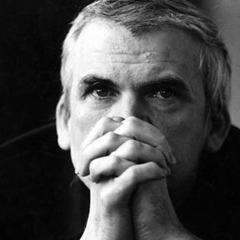
Milan Kundera
Milan Kundera is a renowned Czech-French writer known for his profound psychological insights and unique narrative techniques. His works often explore themes of personal freedom, love, morality, and existentialism, with notable titles including 'The Unbearable Lightness of Being' and 'The Joke'. more
You May Also Like
“A tongue doesn't get things done.”
Source: Wealth of Words
“Une vie est réussie quand elle n’est faite que de verbes d’action.”
Source: Petit traité sur l'immensité du monde
“Dreams are meant to be pursued, not postponed.”
Source: Ocean Nomad | The Complete Atlantic Sailing Crew Guide - How to Catch a Ride & Contribute to a Healthier Ocean
“When it's sunny, why not spend some time dressing up and go out to have a walk!”
Source: Gakuen Alice, Vol. 14
Source: The Beginning
Source: The Chronicle of Sapta Sindhu